
Gửi bình luận
Hủy
Gửi
Sat, 10/10/2026

DOI: https://doi.org/10.70786/PTJ.V4.53939
(PTOJ) - On March 17, 2025, General Secretary To Lam published the article "Private economic development - A lever for a prosperous Vietnam" in which he emphasized: If in the early stages of renovation, the private economy only played a secondary role, the economy mainly relied on the state sector and foreign direct investment (FDI), then in the past two decades, the private economic sector has grown strongly, becoming one of the leading important pillars of the economy and increasingly showing itself to be the most important driving force for promoting national economic growth. The Political Theory Journal respectfully introduces the full text of the General Secretary's article.
The journey of nearly 40 years of renovation has marked a resilient, breakthrough and development-aspiring Vietnam. From an inefficient, centrally planned economy with an average per capita income of only USD 96 in 1989, Vietnam has risen strongly and is expected to enter the group of upper-middle-income countries by the end of 2025, with an income per capita equivalent of over USD 5,000/person/year. This miracle is not only the result of the correct development path under the leadership of the Party with bold and decisive reforms in institutions, policies and integration, but also the result of the spirit of hard work, creativity, determination, and continuous efforts of our entire nation.
Even more proudly, Vietnam’s economic growth rate has consistently been twice the average of developing countries, despite global economic fluctuations. From a poor economy, dependent on international aid, Vietnam has continuously made strong breakthroughs to become the 24th largest economy in the world in terms of purchasing power parity (PPP). The achievements are not only in the economic field but also include great social progress, contributing to a steadily improving and happy life for the people.
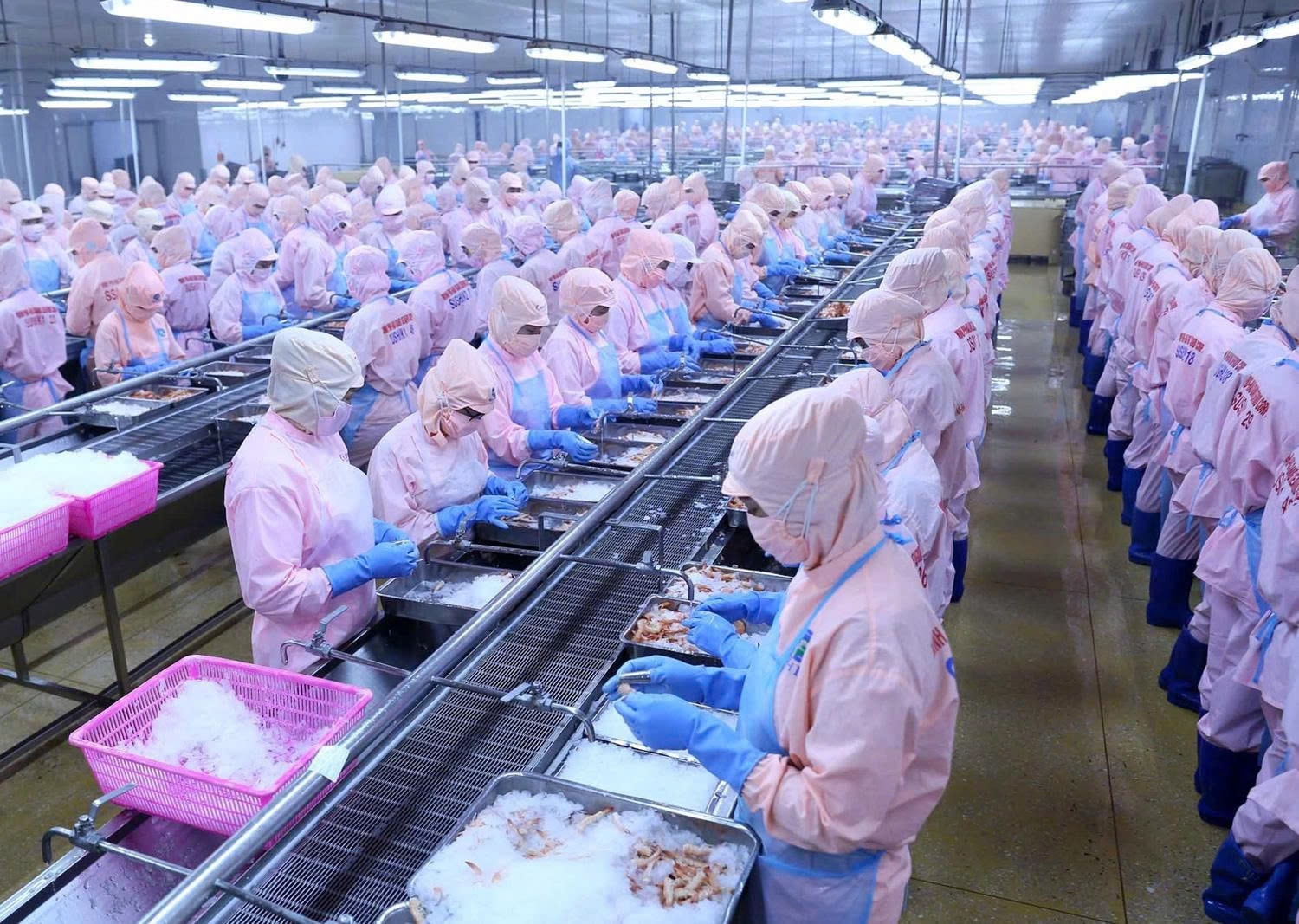
This success includes the significant contribution of the private economic sector. If in the early stages of renovation, the private sector only played a secondary role and the economy mainly relied on the state sector and foreign direct investment (FDI), then in the past two decades, especially when the Politburo issued Resolution 09 in 2011 and the Central Committee issued Resolution 10 in 2017 on private economic development, this economic sector has risen strongly, becoming one of the leading pillars of the economy and increasingly showing itself to be the most important driving force for national economic growth. With nearly one million enterprises, about 5 million individual business households, the private economic sector currently contributes about 51% of GDP, more than 30% of the state budget, creates more than 40 million jobs, accounts for more than 82% of the total labor force in the economy, and contributes nearly 60% of total social investment capital.
The private economy not only helps expand production, trade and services but also makes an important contribution to improving labor productivity, promoting innovation and enhancing national competitiveness. The strong rise of many Vietnamese private enterprises not only dominates the domestic market but also affirms their brands in the international market. This proves that if there is a favorable development environment, Vietnamese enterprises can absolutely reach far and compete on equal footing globally.
However, despite its increasing contributions, the private economy still faces many barriers that hinder its development, and prevent breakthroughs in terms of scale and competitiveness. Many individual economic households still follow old business practices, lack the motivation to develop into enterprises, and even “do not want to grow”. The majority of Vietnamese private enterprises fall into the small and micro enterprises, with limited financial potential and management skills, lacking connections with each other as well as with the foreign direct investment sector; they have not yet taken full advantage of the opportunities brought by Industrial Revolution 4.0, are still slow to digitalize, very few enterprises invest in research and development (R&D), pay little attention to business model innovation, technological innovation or new product creation. Therefore, it is very difficult to increase added value, promote competitiveness, enhance corporate value and reach international standards.
In addition to inherent limitations, private enterprises also face many barriers in accessing resources, especially credit capital, land, resources and high-quality human resources, especially in the fields of technology, engineering and finance. Meanwhile, some state-owned enterprises hold many resources, land, capital, and high-quality human resources but have not utilized them effectively or even wasted them. In addition, the legal system still has many shortcomings and overlaps, the business environment has many obstacles, administrative procedures are complicated, time-consuming, costly and potentially risky. In many cases, the right to freedom of business and property rights are still violated due to incompetence or abuse of power by some civil servants in performance of their duties.
Furthermore, the Government’s preferential and support policies are not really effective and fair among economic sectors and are not easily accessible to the private sector. In many cases, state-owned enterprises and foreign enterprises still receive more incentives than the private sector. State-owned enterprises often have more favorable access to land, capital, and credit; while foreign enterprises often receive better support in terms of taxes, customs procedures, and land access. In addition, corruption and informal costs still exist, creating an invisible burden for private enterprises, reducing production and business efficiency and causing hesitation when expanding investment.
Clearly, the limitations on the development of private enterprises stem in part from institutional and economic policy shortcomings and the business environment. These bottlenecks not only restrain the growth rate of the private economic sector, causing its contribution to GDP to remain almost unchanged for more than a decade, but also prevent the economy from increasing added value, escaping the middle-income trap, and slowing down the process of turning Vietnam into a high-income developed country by 2045 as outlined by the Party’s Resolution and as expected by the People.
Towards the common vision of the country, the private economy also needs to define more clearly its mission and vision. The private economy must be a pioneering force in the new era, successfully implementing the cause of industrialization and modernization of the economy, enhancing national competitiveness, bearing social responsibility, making contributions to improving people’s lives, participating in building a civilized and modern society and contributing to building a dynamic and internationally integrated Vietnam. The private economy needs to strive to become the main force, leading in the application of technology and innovation, to achieve the goal of contributing about 70% of GDP by 2030; more and more private enterprises have the capacity to compete on a global scale, master technology and deeply integrate into international value chains and supply chains; together with the whole country, building a dynamic, independent, self-reliant, self-sufficient, and prosperous Vietnam.
In order for the private economic sector to fulfill its mission and realize this aspirational vision, the most important factor is the need for continued breakthrough reforms in institutions, policies and the business environment so that the private economy can maximize its potential and become the driving force leading the economy to reach the international market. A prosperous economy cannot rely solely on the state sector or foreign investment, but must rely on its internal strength, which is a strong private sector, playing a pioneering role in innovation and national development. The national economy is only truly prosperous when all people participate in productive labor to create material wealth, a society where everyone, every household, and every person is enthusiastic about working.
In light of this requirement, we need to thoroughly re-orientate the viewpoints and perceptions throughout the political system on the role of the private economy as the country’s leading growth engine. This requires a fundamental change in policy making, overcoming limitations and promoting the superiority of the market mechanism to support the private economic sector in improving labor productivity and innovation. The State must have a management method suitable to the market mechanism, ensuring the freedom of business, property ownership rights and the right to fair competition for the private economy; removing all barriers, making policies transparent, eliminating group interests in policy making and resource allocation, and not discriminating between the private economic sector, state-owned enterprises and foreign-invested enterprises in all policies. At the same time, there must be a consistent stance: “everyone has the right to do business in areas not prohibited by law,” and policies must be built to reassure investors, businesses, and entrepreneurs. There must be stronger trust between the State and the private sector, thereby encouraging businesses to boldly invest, innovate, and engage in strategic economic sectors.
The upcoming resolution of the Politburo on the private economy needs to encourage, support and orient the development of the private economy, creating a breakthrough driving force, opening up an era of growth for Vietnamese private enterprises. Developing the private economy must be identified as a long-term national strategy and policy. The private economy, along with the state and collective economies, forms the core base to build an autonomous, self-reliant, resilient economy. In this, the focus should be on several key solutions:
Firstly, continue to accelerate the completion of a fully-fledged, socialist-oriented, modern, dynamic and integrated market economy institution. This is a prerequisite for the private economic sector to develop rapidly and sustainably. To achieve this, the State needs to focus on stabilizing the macro economy, improving institutions, ensuring that the economy operates according to market principles, minimizing intervention and eliminating administrative barriers and the request-grant mechanisms, truly managing the economy according to market principles and using market tools to regulate the economy. In particular, it is necessary to strictly control monopoly enterprises and policy manipulation, protect fair competition, and ensure that private enterprises have equal opportunities to develop. The core point of perfecting the market economy institution is to clearly define the role of the State in the economy, accordingly the State focuses on macro-regulation, creating a favorable business environment, ensuring the effective operation of the market mechanism, and ensuring social justice. Promoting private economic development must be considered a central task today.
Secondly, effectively protect property rights, ownership rights, freedom of business and ensure contract enforcement for private enterprises. One of the functions of the State in a modern market economy is to protect the property rights of investors. Therefore, the State needs to build and enforce a strict legal mechanism to protect property rights, including intellectual property rights and intangible assets; minimize legal risks, and limit sudden policy changes that cause losses to enterprises. Create a mechanism to support and protect private investors, especially start-ups and innovative enterprises, to help them feel secure and develop smoothly. In addition, a modern socialist-oriented market economy requires a transparent, effective and efficient contract enforcement system, helping enterprises feel secure in trade and investment transactions. To do this, the State needs to reform the commercial justice system, shorten the time to resolve contract disputes, minimize costs and risks for businesses, reduce contract violations without effective sanctions; increase the transparency and effectiveness of economic courts and commercial arbitration, ensure fair and objective decisions, and help businesses protect their legitimate rights. Strengthen supervision of law enforcement, overcome the inconsistency between the central and local levels; strictly handle acts of abuse during inspection and auditing that harass and cause difficulties for businesses, increase investment, and support the development of the private economy. At the same time, strictly punish legal violations by businesses; require businesses to raise legal compliance awareness, build values ethical business values to foster the healthy development of the private economy.
Thirdly, in addition to the need to strongly consolidate the state-owned enterprise sector, especially state-owned economic groups; it is necessary to prioritize the building of regional and global private economic groups, actively support small and medium-sized enterprises, and at the same time support the household economy and cooperative economy; encourage private enterprises to participate in the country’s strategic sectors: practice the view that the private economy plays an important role in the socialist-oriented market economic structure, eliminate the ideology of “valuing the state over the private” and the “monopoly” of state-owned enterprises in some sectors. Form and develop large, strong private economic groups with international competitiveness, with the mission of leading and supporting other domestic enterprises to participate deeply in the global value chain. At the same time, there must be separate policies to support the development of small and medium-sized enterprises, as well as the household economic sector and the cooperative economy, encouraging household businesses to transform into enterprises and develop new and effective cooperative models. In order for the private economy to not only develop in scale but also contribute positively to the long-term development of the country, it is necessary to encourage private enterprises to participate in strategic areas, develop important infrastructure, high technology, key industries and energy security. Expand opportunities for private enterprises in important national projects, join the State in a number of strategic industries and some special fields, improve research capacity and technological innovation. The State should have a policy mechanism to order the private economic sector to participate in a number of key, important national projects and urgent tasks such as the construction of high-speed railways, urban railways, energy infrastructure, digital infrastructure, the defense and security industries, etc.
Fourthly, promote waves of startups, innovation, digital transformation and the application of new technologies. This is a key factor in helping the private sector break through and reach international standards. There needs to be strong and effective support policies to promote private enterprises to apply technology, renovate products, and increase added value. The State needs to create a legal sandbox for new technology fields, encouraging private enterprises to invest in pioneering fields such as artificial intelligence, blockchain, big data, e-commerce, financial technology (fintech) and smart healthcare... Implement financial support policies and tax incentives for enterprises to invest in research and development (R&D). Build a robust startup ecosystem, enabling Vietnamese startups and “unicorns” to rise to the global level.
Fifthly, institutional reform must establish a public administration that “serves businesses - serves the country”: Decisively reform institutions on the basis of renewing the mindset of administrative reform toward serving people and businesses; decisively cut administrative procedures and business conditions; accelerate digitization and technology application in state management to reduce compliance time, costs, and informal fees. Establish an effective policy dialogue and criticism mechanism, create conditions for the private business community to participate in the economic policy-making process, ensuring high practicality and feasibility. Strive for Vietnam’s business environment to be in the Top 3 in ASEAN within the next 3 years.
Sixthly, maximize development resources for the private economy, creating opportunities for the private economy to effectively access important resources such as capital, land, human resources, and technology. Promote the private economy to integrate more deeply into the global economy, enhance Vietnam’s economic position in the international arena, and protect businesses from economic risks. There needs to be more effective support policies so that the private economy can access resources in a convenient, fair, equitable, transparent, and effective manner, and optimize their use. Develop capital mobilization channels for private enterprises, including the stock market, corporate bonds, venture capital funds, credit guarantee funds, and modern forms of finance such as fintech and crowdfunding; develop stable and transparent land policies, creating conditions for private enterprises to access land funds conveniently and at reasonable prices.
The State needs to effectively guide and support Vietnamese private enterprises to participate in the global supply chain, attract strong investment capital and advanced technology, and form a team of entrepreneurs with a global mindset. In particular, there needs to be policies to encourage and orient private enterprises to invest in processing and manufacturing industries, supporting industries, agricultural industrialization, and high technology, instead of focusing too much on real estate and short-term speculative sectors. Develop mechanisms and policies to protect private enterprises from economic shocks, especially in the context of global instability, economic recession, and market fluctuations.
Seventhly, develop the private economy on a sustainable basis, with business ethics and social responsibility: The State promotes the development of the private economy on the basis of macroeconomic stability, closely linked to the green development strategy, circular economy, resource saving, emission reduction and environmental protection. Private enterprises need to proactively carry out social responsibility, not only through financial contributions or charity, but also demonstrating through responsible business policies, caring for workers’ lives, supporting community development; and practicing transparent and effective governance, building a business culture based on ethics, anti-fraud, ensuring fairness with customers, partners, and employees. In addition, private enterprises need to proactively participate in social security programs with the State, contributing to improving social welfare, reducing the gap between the rich and the poor, contributing to building a civilized, humane and beautiful society, where business interests are closely linked to the common prosperity of the country.
The private economy plays a very important role in shaping the future of the Vietnamese economy. We all believe that if the State has appropriate institutions, correct policies and a favorable business environment, the private economy will be nurtured to grow healthily and make strong breakthroughs, not only helping the economy achieve high growth rates but also enabling our country to become a high-income economy within the next two decades. This is the time to act, to create a prosperous, dynamic Vietnam that is increasingly reaching out to the international arena.
We are living in a historic moment, witnessing the unprecedented development of science and technology and a volatile international environment, both cooperation and struggle, where opportunities and challenges always go hand in hand. But with a resilient spirit, with determination and burning desire, Vietnam can absolutely create a new miracle in socio-economic development! A strong economy is taking shape, a generation of Vietnamese entrepreneurs with courage and innovative, creativity, full of business enthusiasm and patriotism, is continuing to write the story of success, and a bright future, a Socialist Vietnam standing on par with the world powers as President Ho Chi Minh wished, is gradually becoming a reality in the near future.

Under supervisory of: Ho Chi Minh National Academy of Politics
Editor in Chief: Assoc. Prof., Dr. Nguyen Thang Loi