Abstract: During the renovation period, the Communist Party of Vietnam has creatively applied Marxism - Leninism, Ho Chi Minh Thought, and practical lessons to effectively mobilize domestic and international resources, promote socio-economic development, maintain political stability, national defense, and security, and enhance the national standing. In the new domestic and international context, with many opportunities and challenges, it is necessary to continue to research and clarify the driving role of this combination, thereby proposing solutions to effectively promote resources for the cause of building socialism.
-
-

Abstract: Throughout the entire historical process of leading the revolutionary cause in Vietnam, our Party has consistently and firmly affirmed that mass mobilization work constitutes a task of profound strategic importance. It serves as a crucial condition for safeguarding the Party’s leadership, for consolidating and further strengthening the vital, blood-tied relationship between the Party and the people, and for erecting the impregnable “fortress of the people’s hearts”. This work has been instrumental in achieving resounding victories in the protracted struggles for national independence, liberation, reunification of the sacred Fatherland, construction of socialism, and the comprehensive, synchronous advancement of the national renewal endeavor. As the nation steps into a new era of development, there arises an imperative demand for the Party and the State to persist in innovation, to elevate markedly the quality and efficacy of mass mobilization activities, and thereby progressively realize the grand national aspiration of erecting a Vietnam that is prosperous, civilized, and suffused with happiness for all its citizens.
-
Abstract: In respect to international relations, foreign policy, and diplomacy, President Ho Chi Minh left a valuable legacy, including a diplomatic ideology, diplomatic style, and unique and effective diplomatic practices, which fully embody the nature of the revolutionary diplomacy of the proletariat, deeply imbued with national identity, and absorbing the quintessence of international relations from countries all over the world. All of these blended into Ho Chi Minh’s school of diplomacy, opening the way for the Vietnamese diplomacy in the Ho Chi Minh era, which the entire Party and people have inherited and developed in ways that still retain lasting value.
-
-
-
-
-
-
-
-
-
-
-
-
-
-
-
-
-
-
-
(PTOJ) - In accordance with directives from the Party Central Committee, the Politburo, and guidelines from the Party Committee of Central Party Agencies, and subordinate party organizations under the Ho Chi Minh National Academy of Politics, Party Committee are convening their 2025-2030 term congresses. These precede the 15th Academy Party Congress and the 14th National Party Congress. Professor, Dr. NGUYEN XUAN THANG, Politburo Member, Secretary of the Party Committee, President of the Ho Chi Minh National Academy of Politics, and Chairman of the Central Theoretical Council, has authored a directive guiding the Academy's Party congresses at all levels. The Political Theory Journal is honored to introduce this significant directive.
-
-
-
-
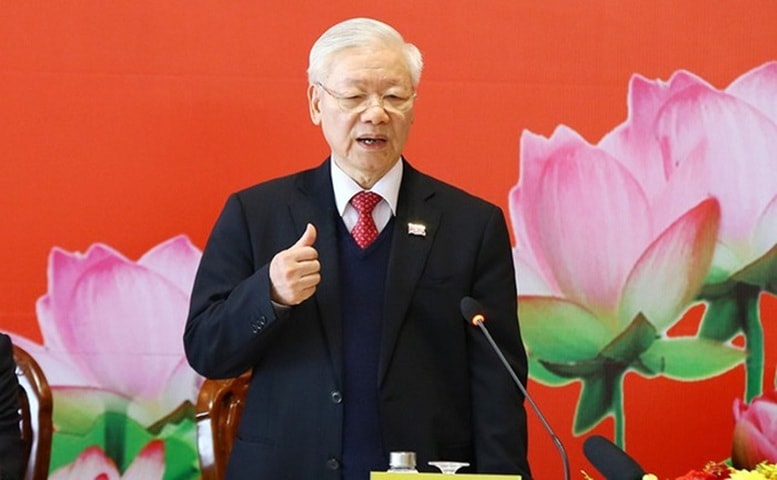
DOI: 10.70786/PTJ.V43.2637 (PTOJ) - The book “Building and developing an advanced Vietnamese culture imbued with national identity” selects 92 articles, speeches, remarks, notes, interviews, letters, etc., by General Secretary Nguyen Phu Trong on building and developing Vietnamese culture over a period of nearly 60 years, across various roles and different periods. The content of the book shows the General Secretary’s deep concern for the cause of building, preserving, and developing Vietnamese culture. It integrates both traditional and modern elements, balancing identity and integration, creating an internal cultural strength, and mobilizing the power of Vietnamese culture and people in the mission of building and developing a prosperous nation. The General Secretary’s wisdom and love for culture are imbued in every directive, article, and statement, demonstrating the leading and motivating role of culture in the country’s development, as well as the significance of preserving the values of national culture.
-
-
-
POWERED BY