
Gửi bình luận
Hủy
Gửi
Tue, 20/10/2026

DOI: https://doi.org/10.70786/PTOJ.2026.3973
Abstract: The current global landscape has undergone complex changes, strongly affecting the trajectory of countries around the world. In this context, accurately determining Vietnam's position within both the regional and global order is essential and holds significant importance in shaping Vietnam’s current foreign policy strategy. This article discusses Vietnam’s positioning in the global security, political, and economic architecture, as well as within the global multilateral foreign policy framework. Through this recognition, Vietnam continues to pursue a foreign policy that is active, proactive, and responsible in international relations through 2030 with a vision toward 2045.
Dr. TRINH THI HOA
Institute of Politics and International Relations,
Ho Chi Minh National Academy of Politics
1. Introduction
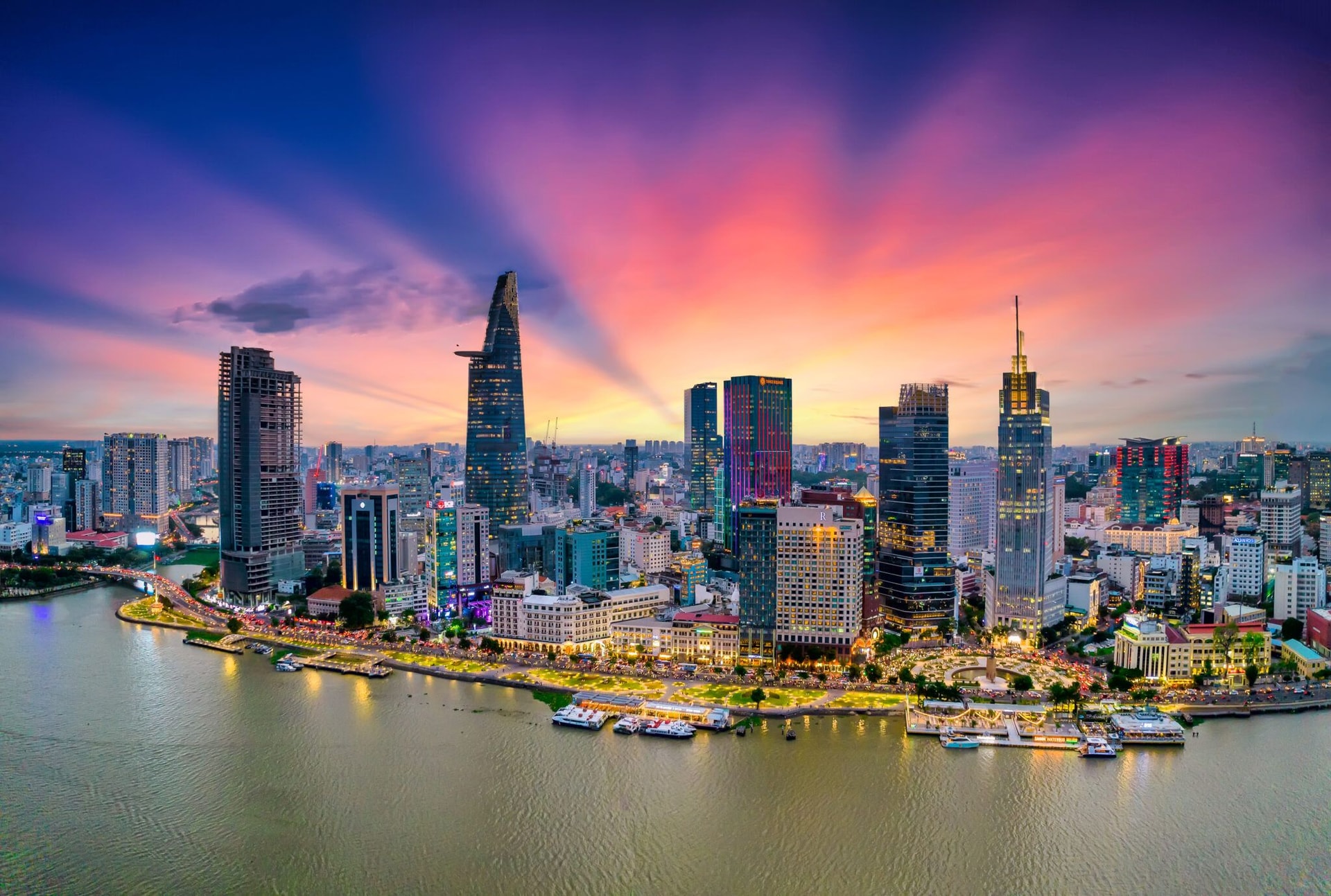
In the third decade of the 21st century, the global landscape is witnessing complex and unpredictable transformations that are profoundly reshaping the overall picture of the world. These changes are especially impacting the development strategies of countries, including Vietnam. Under the leadership of the Communist Party, Vietnam is entering a new era of national advancement. The Party and State of Vietnam place great importance on forecasting and positioning the country within the global context in order to formulate appropriate foreign policy lines and strategies, enabling the nation to confidently turn a new page in the history of the 21st century.
2. Content
2.1. Positioning Vietnam in the world security and political situation
The new world security and political landscape is evolving towards increased competition, confrontation, and formation of alliances among major powers. Vietnam continues to implement a policy of not “choosing sides”, while building and consolidating comprehensive strategic partnerships with major countries.
Currently, the world situation is changing rapidly and becoming increasingly complex. On a global scale, there are 6 main pairs of contradictions: war - peace; competition - cooperation; openness - integration - independence and autonomy; solidarity, association - separation, demarcation; development - backwardness; autonomy - dependence; and 4 characteristics of the era are: (1) Uncertainty and instability in the global security environment are at high levels, with local conflicts and the trend of military buildup becoming increasingly complex; (2) The world economy is entering a new development cycle, with new technology and innovation becoming decisive factors for economic growth, though accompanied by many risks; (3) Multilateralism continues to play a key role but is being seriously challenged. Many new global challenges are emerging, requiring new governance methods and new rules of the game; (4) The Indian Ocean - Asia - Pacific region is also facing significant risks and challenges from hotspots, local conflicts, and great powers competition(1).
Conflicts of interest between major powers in particular and among countries in general, along with the lack of transparency in policies and actions in the process of changing the “rules of the game”, are exacerbating risks to global security and politics. The trend of coalition-building and confrontation is increasing, particularly between the US and China. By promoting global initiatives such as the Belt and Road Initiative (BRI), the Global Security Initiative (GSI), and the Global Civilization Initiative (GCI), China aims to expand cooperation with countries in the region and around the world; simultaneously leveraging bilateral and multilateral cooperation mechanisms for propaganda, consultation, and negotiation. China’s partner countries are increasing in number, spanning from Asia, Europe, Africa and Latin America. In 2023 alone, China upgraded bilateral relations with 17 countries and territories, most of which were developing countries(2).
Meanwhile, the US and its allies have also increasingly asserted their role in maintaining the world order based on the system of international law and global governance institutions established after World War II, by increasing security and political engagement on a global scale.
The North Atlantic Treaty Organization (NATO) is constantly expanding, creating an “anti-Russian alliance”. This alliance implements an “eastward expansion” policy, approaching the Russian border, and conducts “proxy wars”, protracting the Russia-Ukraine conflict, and even accelerates the process of “dividing the battle lines” on the international chessboard. On the other hand, NATO’s invitation to four countries in the Western Pacific (Japan, South Korea, Australia, New Zealand) to attend the Foreign Ministers’ Conference in Brussels (in Belgium, April 2023) shows that the US and its allies’ force base continues to expand from Europe to Asia.
In the Indo-Pacific region, the United States continues to assert its leadership through the “Free and Open Indo-Pacific Strategy” (FOIP) aiming to strengthen a “unified alliance system” and deep partnerships. The “Quad” mechanism (US, Japan, Australia, India) and the US-Australia-UK Trilateral Cooperation Agreement (AUKUS), along with the Indo-Pacific Economic Framework (IPEF) demonstrate the US’s desire to achieve its goals through a broad network of allies and partners.
For Russia, Europe is regarded as the top strategic priority. Russia is determined to assert itself as a regional power, firmly defend national interests, and minimize and neutralize threats to its security and territorial integrity, advocating non-confrontation with the West. However, in the context of the complicated developments of the Russia-Ukraine conflict, especially since Ukraine became a testing ground for “proxy war” of the US and the West, Russia quickly mobilized countries in the Collective Security Treaty Organization (CSTO), establishing a “red line” with the West. Russian Foreign Minister Sergei Lavrov predicted that Russia would not consider Western European countries as partners for “at least one generation”(3). In the Indo-Pacific region, Russia upgraded its “unlimited partnership” with China, implemented an “Eastward policy”, and made efforts to expand and strengthen its global partnership system.
In addition, the rise and strategic maneuvering to assert major power roles by other countries and other organizations in the world, such as India, Japan, the UK, Germany, and the European Union (EU), are increasing. The current global trend toward either competition or détente depends on the relationship among the three leading world powers: the US, China, and Russia, which is considered the most important trilateral relationship, decisive to the international political and security situation.
In this context, continuing to apply Ho Chi Minh Thought “In the international arena, how to ensure our country is not isolated while still maintaining a superior position”(4); “To be friends with all democratic countries and not making enemies with anyone”(5), Vietnam advocates a foreign policy in the renovation period following the motto “making more friends and fewer enemies”, “being friends with all countries in the world”, “diversifying and multilateralizing foreign relations”. Vietnam advocates “Promoting and deepening bilateral cooperation with partners, especially strategic partners, comprehensive partners and other important partners, creating a situation of intertwined interests and increasing trust”(6).
Vietnam is building a comprehensive diplomatic strategy, placing importance on “comprehensive strategic partnerships”, flexibly adapting among major powers, primarily the US, China, and Russia; while continuing to focus on and creating breakthroughs in relations with regional powers and major countries globally. As of January 2025, Vietnam has established comprehensive strategic partnership frameworks with 9 countries; strategic partnerships with 11 countries, comprehensive partnerships with 13 countries, and has relations with all 5 permanent members of the United Nations Security Council and the Group of Seven leading industrialized countries globally (G-7), and so on.
As a country located at the center of great power competition, Vietnam’s foreign policy focuses on minimizing disadvantages by continuing to promote the building of strategic trust with major powers based on a peaceful, just, righteous Vietnam, with transparency in resolving disputes and conflicts in the region and the world. In addition to establishing a stable and sustainable relationship framework with major powers and key partners, Vietnam selectively expands its frameworks of strategic partnerships and comprehensive partnerships. In particular, Vietnam actively coordinates with major powers in regional and international multilateral forums, focusing on promoting cooperation in the fields of diplomacy, defense, security, etc. This is also a requirement for Vietnam’s strategic security autonomy, aimed at a more just global order.
International law is being violated in many places around the world. Vietnam upholds cooperation and struggle in international relations based on international law and the United Nations Charter.
In several regions, wars and conflicts are erupting frequently, and international law is being seriously violated; in many cases, small and medium-sized countries are becoming victims of authoritarianism. The increasing contradictions, competition, and conflicts among major powers and regions are accelerate the trend of demarcation in international relations, raising great concerns about the value and effectiveness of international law and standards, as well as the mechanisms for controlling and preventing conflicts being disabled. The prevailing trend among developing countries today, including Vietnam, is to uphold international law in international relations. Vietnam actively works with partners to build transparent policies, monitor the behavior of parties, and issue early warnings about violations of international law and national sovereignty; actively promotes multilateralism, democratizes international relations, and builds an appropriate order based on international law.
Southeast Asia in particular, and the Indo-Pacific in general, are areas where the interests of major powers converge, posing potential regional security risks. Vietnam leverages its geopolitical advantages and strategic autonomy in safeguarding and developing the country, striving for a Southeast Asia that is peaceful, stable, cooperative, and prosperous.
In the 20th century, Western strategists assessed that “If Southeast Asia is the lock to open the Asian continent, then Indochina is the key”(7). In the 21st century, this remains a top strategic space for major powers; it is a place where factors of instability arise due to strategic competition, territorial and resource disputes. The situation in the East Sea is increasingly complex and unpredictable, seriously threatening peace, stability, and development in the region. Notably, these disputes all involve direct or indirect participation and involvement by major powers. The influence of multiple parties, overlapping and tugging of interests among stakeholders and major countries is making the region increasingly unstable in terms of security.
Vietnam is considered a “strategic point” in both security and economic aspects in international relations. Its geographical location always poses great challenges in the construction, development, and protection of the Vietnamese Fatherland. To overcome these challenges, Vietnam adopts and creatively applied President Ho Chi Minh’s “power-over-force” strategy: “A weight of only one kilogram, when in an advantageous position, its force increases greatly, strong enough to lift an object weighing hundreds of kilograms. That is power over-force”(8).
With its important geo-strategic position and affirmed tradition of independence and autonomy, Vietnam’s strategic value on the “large chessboard” is increasing, while also facing difficulties and challenges. Vietnam is maximizing its geo-political value, minimizing the negative effects of its position, and ensuring a peaceful and stable environment for the country’s development.
2.2. Positioning Vietnam in the global political landscape
The global landscape continues to evolve toward multipolarity and multi-centricity. The foundational values of political ideologies and social models around the world continue to engage in friction and mutual critique. Vietnam resolutely defends the ideological foundation of the Party, President Ho Chi Minh, and our people have chosen, for peace, justice, democracy, and progress in the region and the world.
The multipolar trend is increasingly evident through the competition and development of subjects in international political life. The leading powers are playing a decisive role in the process of structuring the new world order. In terms of ideology, the new global situation reflects a diverse and complex political system, in which no political ideology is strong enough to dominate world politics. On the other hand, various forms of political thought are engaging in mutual critique, having yet to find common ground, and are even locked in fierce conflict in their pursuit of political power and influence.
In this context, the Party and State of Vietnam always affirm Marxism-Leninism and Ho Chi Minh Thought as the ideological foundation and guiding compass for all activities, in accordance with the practical conditions of the Vietnamese revolution. The Party aims to successfully lead the people in building a prosperous, strong, democratic, equitable, and civilized Vietnam along the path of socialism, ultimately realizing the ideal of communism. The true value of socialism is the “people”, thus, the political system that Vietnam continues to pursue is one in which all real power belongs to the people, is exercised by the people, and serves the interests of the people. Socialist Vietnam will make active contribution to peace, justice, democracy, and progress in the region and the world.
The global landscape is witnessing the rising role of middle-powers. Vietnam continues to be a reputable country in the region and globally with its position of a rising regional power.
International institutions are currently expanding their framework, allowing other forces to participate and express their voices to a certain extent, including middle powers. The rise of middle powers is seen as a process of continuous struggle and revolution to resolve the contradiction between the rulers and the ruled, in which actors will try to maximize their power to achieve an advantageous position in the international system(9).
The role of middle powers is being demonstrated through active and proactive policies to transform their role from being rule-takers to rule-makers, and to construct globally expansive diplomatic networks. Vietnam is striving to increase its “hard power” and “soft power”. In 2023, the UK’s independent Center for Economic Forecasting and Analysis (CEBR) ranked Vietnam 34th among the world’s economies and forecast it would rise to 24th place by 2033, and 21st place among the world’s largest economies by 2038(10). In terms of “national brand value”, in 2023, Vietnam was ranked 46th out of 132 countries and economies by the World Intellectual Property Organization (WIPO)(11).
In 2023, Vietnam’s gross domestic product (GDP) grew by 5.05%, with macroeconomic stability, inflation under control, and major economic balances maintained(12). In 2024, GDP grew by 7.09% compared to the previous year(13). CEBR forecasts that Vietnam may reach the goal of becoming a high-income country by 2045.
As of the end of January 2025, Vietnam had established diplomatic relations with 194 out of 200 countries worldwide, including all member states of the United Nations (UN). International partners and world scholars assess Vietnam as a “rising middle power” in the region. In this position, Vietnam will be under more pressure from major power competition, requiring more flexible adaptation in international relations while still ensuring national interests. On the other hand, with its middle power status, Vietnam continues to have a lot of room to be proactive in bilateral and multilateral diplomatic channels, particularly in taking the lead regionally and contributing internationally significant initiatives.
Vietnam is entering as era of ascendance, beginning with the 14th National Congress. This is “the era of development, the era of prosperity under the leadership and rule of the Communist Party of Vietnam, successfully building a socialist Vietnam, a prosperous people, a strong country, a democratic, equitable, civilized society, standing on par with the world powers”(14).
The top priority in this new era is to successfully implement the strategic goals: by 2030, Vietnam will become a developing country with modern industry and high average income; by 2045, it will become a developed socialist country with high income. In this era, Vietnam will strongly awaken the national spirit, the sense of self-reliance, self-confidence, self-improvement, and national pride; at the same time, while becoming a country that plays an active role in world peace, stability, development, human happiness, and global civilization.
In terms of foreign policy direction, Vietnam needs to adopt “niche diplomacy” that is appropriate to the position and strength of a middle power in a rapidly changing, complex, and unpredictable strategic environment. Vietnam continues to consider ASEAN and the United Nations as priority channels in multilateral diplomacy; in bilateral channels, Vietnam prioritizes groups of neighboring and regional partners, major powers, and traditional friends.
Regarding international cooperation, Vietnam needs to focus on non-traditional security fields (climate change response, human security...) to specialize and orientate them to become important foundations of foreign policy.
In terms of action, Vietnam proactively participates in shaping the “rules of the game” at the international level, playing a core, leading, and mediating role at important multilateral and regional forums, contributing to the global security, peace, and progress.
2.3. Positioning Vietnam in the global economic landscape
Vietnam is a developing country pursuing industrialization and modernization, actively responding to the opportunities and challenges of Industrial Revolution 4.0.
Industrial Revolution 4.0 is having a profound impact on international life, changing production methods as well as changing national strategies, policies and international relations. Countries’ thinking regarding worldviews, development strategies, and approaches to international relations, are also changing. For Vietnam, Industrial Revolution 4.0 is posing great opportunities and challenges, requiring adaptation and keeping up with modern science and technology. Vietnam must readjust both its structure and operating principles, adapt to changes in science and technology; attract large corporations and high-tech corporations to serve the country’s industrialization and modernization process.
In leadership thinking, the Party and the State of Vietnam have creatively applied Ho Chi Minh’s viewpoint on science and technology in the new era: “The socialist revolution is closely linked to the development of science and technology, and the cultural development of the people”(15). Our Party identifies science and technology as a top national policy, a key driving force for the development of modern productive forces. The industrialization and modernization process in Vietnam “is based on the foundation of science, technology, renovation and technological achievements of Industrial Revolution 4.0”(16).
Vietnam’s development goal is “to become a developing country with modern industry and high average income by 2030 and to become a developed country with high income by 2045”(17). To achieve this goal, Vietnam’s investment in science and technology is expected to reach 1.2 - 1.5% of GDP by 2025, and 1.5 - 2% of GDP by 2030(18). At the same time, continue to “promote international integration and cooperation in science and technology, diversify partnerships, select strategic partners among countries with advanced science and technology; closely link international cooperation in science and technology with international economic cooperation”(19), promote close linkages between cooperation in science, technology and innovation with cooperation in economics, national defense and security; and focus on technology transfer from partners to serve the goal of industrialization and modernization in Vietnam.
Vietnam is among the first countries in the world to issue a National Digital Transformation Program to 2025, with a vision to 2030 (Decision No. 749/QD-TTg dated June 3, 2020, by the Prime Minister), aiming to accelerate the digital transformation process, adapt to the new situation and take advantage of the opportunities brought by Industrial Revolution 4.0. In the new global context, Vietnam’s economy will be a digital economy applying new models, systems, and technologies along with a series of other adjustments to institutions, policies, legal regulations, high-quality human resources,... in line with international standards. Public administrative agencies and Vietnamese enterprises (especially small, medium, and micro enterprises) need to adapt quickly to the digital transformation process.
The world’s economic centers are shifting to the Indo-Pacific region, where fierce competition, alliance formation, and redistribution of economic power are taking place. Vietnam is located at a “strategic point” of this redistribution and restructuring of the global value and supply chain after the Covid-19 pandemic; it is a destination for international investment and tourism.
The Indo-Pacific region is now becoming an important “backbone” in the global economy. This is where major economies and new industrial economies are present, with fast-growing markets. A number of new-generation Free Trade Agreements (FTAs) of large scale are concentrated in this region. Notable examples include the Regional Comprehensive Economic Partnership (RCEP), the Asia-Pacific Economic Cooperation Forum (APEC), the Comprehensive and Progressive Agreement for Trans-Pacific Partnership (CPTPP), and the Asia-Europe Meeting (ASEM), etc.
The number of new-generation FTAs involving leading economies is increasing rapidly, contributing to accelerating the process of regional integration. In addition, many new cooperation mechanisms in the region have been formed and are having a profound impact on the regional and global economic situation. A notable example is the ASEAN Community, which has created a turning point in the process of expanding regional economic integration with partners of the Association of Southeast Asian Nations (ASEAN). This connection has become an important tool in strategic competition, playing the “central” role for ASEAN in the economic structure that is forming in the Indo-Pacific region.
Vietnam is a developing country located at the center of major economic strategies and at the heart of multilateral economic mechanisms undergoing comprehensive and deep integration. On the other hand, in the trend of globalization and international free trade, Vietnam’s economy is highly open and is participating extensively in new generation FTAs (such as CPTPP, EVFTA) and FTAs and the world’s largest scale (such as RCEP). As of early January 2025, Vietnam participates in 20 FTAs, of which 16 FTAs have come into effect and are being implemented; 1 FTA with the United Arab Emirates has been signed and is awaiting ratification; Vietnam continues to study and seek opportunities to establish additional FTAs with over 60 countries and territories; and actively participates in multilateral FTAs and economic forums at both regional and international levels.
When geopolitical conflicts, trade wars, or trends of rising protectionism occur, major powers will adjust their economic policies, promote diversification strategies and ensure sustainable supply sources. These adjustments will have strong and comprehensive impacts on Vietnam’s economy, posing the requirement to balance between deep integration into global supply chains, trust in Vietnam’s position as a “lifeline” or “strategic point” in international supply chains, and ensuring the independence and autonomy of the national economy. Vietnam must continue to restructure the roles of the State and the market to align with regional and global scopes and proactively respond to threats to non-traditional security. Vietnam also emphasizes the importance of maintaining a stable political environment to continue being a dynamic partner, with a growing middle class, consistent in economic development policies and foreign investment attraction.
2.4. Positioning Vietnam in regional and global multilateral mechanisms
Vietnam continues to play a leading and reputable role in ASEAN, working with member countries to build a strong ASEAN Community and uphold a central role in the Indo-Pacific regional structure.
ASEAN is currently regarded as a prestigious regional organization, playing a “central role” in the structure of the Indo-Pacific region. Vietnam is recognized as a stable country, successful in renovation, comprehensive integration, dynamic development, and is the fourth largest economy in ASEAN. Vietnam aims to be a leading, active, and responsible member, working with ASEAN toward the successful implementation of the “Post-2025 ASEAN Vision”; and, at the same time, collaborating with ASEAN to define the strategic framework of the “ASEAN Vision to 2045” over the next 20 years, with orientations covering the pillars of politics-security, economy, and socio-cultural affairs. The “ASEAN Vision to 2045” opens new hopes for ASEAN’s transformation in general and for Vietnam in particular, aiming toward an ASEAN that is “resilient, innovative, dynamic and people-centered”(20).
Vietnam proactively maintains and coordinates ways to resolve disputes in the East Sea in a peaceful manner, in accordance with international law.
In ASEAN-initiated multilateral security mechanisms, Vietnam leverages commonalities in interests and approaches between ASEAN and major powers on the East Sea issue to safeguard national interests and advocate for peaceful dispute resolution based on respect for international law. Vietnam’s position is to “continue promoting resolution of maritime issues, maritime and aviation security and safety based on international law, especially the 1982 United Nations Convention on the Law of the Sea”(21).
As the chair and coordinator of the ASEAN Regional Forum (ARF), the ASEAN Defense Ministers’ Meeting (ADMM), the ASEAN Defense Ministers’ Meeting Plus (ADMM+), and the East Asia Summit (EAS), Vietnam continues to emphasize the urgency of ensuring freedom of navigation and overflight, maintaining unimpeded legal commercial activities in the East Sea; calls for demilitarization and restraint, non-use of force in handling disputes in the East Sea; respect for international law, including the 1982 United Nations Convention on the Law of the Sea, regional principles of conduct, and proactively promotes the process of building a Code of Conduct in the East Sea (COC) between China and ASEAN.
Vietnam introduced an initiative on cooperation between the United Nations and ASEAN for the first time at the Security Council, contributing to the promotion of comprehensive cooperation between the two organizations, focusing on priority areas such as peaceful settlement of disputes, preventive diplomacy, disarmament, peacekeeping, counter-terrorism, maritime cooperation, and maritime security.
Vietnam actively promotes ASEAN’s foreign relations and cooperation with international partners; and proactively takes the lead in Mekong Sub-region cooperation.
As an ASEAN member, Vietnam continues to promote the expansion of its membership in ASEAN-led mechanisms such as ARF, EAS, and ADMM+. Vietnam has effectively assumed the role of coordinator of ASEAN-China relations (2009-2012), ASEAN-EU (2012-2015), ASEAN-India (2015-2018) and ASEAN-Japan (2018-2021). Vietnam’s dynamism, sensitivity, positivity and increasing prestige, along with its extensive international relations, contribute to strengthening ASEAN’s relations in mechanisms such as ASEAN+1, ASEAN+3, APEC, ASEM, EAS, G20, and the UN.
Vietnam considers ASEAN as a “gateway” to the world, thereby developing strategic orientation as a priority in international relations, becoming more active and proactive in sub-regional cooperation and the Greater Mekong Sub-region. Vietnam proactively proposes initiatives and action programs to promote practical cooperation, linking the implementation of the United Nations 2030 Agenda for Sustainable Development with the development of the Mekong Sub-region.
With neighboring countries Laos and Cambodia, Vietnam continues to uphold the traditional neighborly friendship, with the viewpoint of “consolidating peaceful, secure, cooperative, and developmental borders; resolving outstanding issues related to land borders with neighboring countries”(22). In particular, Vietnam is a pioneer in the “Development Triangle” mechanism (1999 - 2024), playing a model role in connecting the three countries of Vietnam - Laos - Cambodia. This mechanism has maintained a peaceful and stable environment in the 13 strategic border provinces and brought tangible economic social, defense and security benefits for the entire Indochina region.
Vietnam is a proactive, active, responsible and reputable member of the United Nations.
Vietnam affirms a strong message of being a peace-loving country and a responsible member, participating more actively, proactively and effectively in the common work of the United Nations in dealing with global challenges, actively and credibly serving as a “mediator”. As Vice President of the 77th session of the United Nations General Assembly (2022 - 2023), Vietnam proactively took the lead in implementing development goals and reforming United Nations agencies in Vietnam.
The United Nations has assessed Vietnam as “a model of a developing country that has successfully renewed itself, seriously fulfills international commitments, and always places people at the center and as the driving force of development”(23), and is striving to implement the Sustainable Development Goals (SDGs) by 2030. Vietnam was chosen to host the signing ceremony of the United Nations Convention on Cybercrime (Hanoi Convention) in 2025, marking Vietnam’s position in global multilateral diplomacy. This is also the success for Vietnam and other members of the United Nations in building a comprehensive multilateral legal framework on cybercrime in response to the impact of the modern scientific and technological revolution.
Vietnam’s viewpoints and orientations in the United Nations are completely consistent with the principles and orientations of this organization. Furthermore, in the context of declining trust between countries and multilateral cooperation facing many challenges and obstacles, Vietnam calls for strengthening trust and enhancing international solidarity and responsibility. Vietnam continues to participate in and reaffirm its commitment to actively implement international obligations and responsibilities as a member state in all fields, with the aim of running for several important positions in the United Nations from now until 2045.
3. Conclusion
The global landscape is undergoing strong, complex, and unpredictable transformations, deeply reflecting the cooperation, competition, and confrontation among global power actors. This is a “transitional” process to establish a new world order, inevitably accompanied by disruptions, negations, and unifications among international actors in all fields. Vietnam, as a developing country pursuing the path of socialism, led by the Communist Party, must accurately position itself within the new global landscape in order to operate a development strategy in line with global trends, seize opportunities to the fullest, and minimize disadvantages.
Vietnam’s in the global landscape is defined through the dimensions of security, economy, and its status and potential as a middle power with the capacity to participate in “shaping” future regional and international rules; and through Vietnam’s active, proactive, and responsible engagement in regional and global multilateral mechanisms. This is the result of the correct foreign policy of the Party and the State of Vietnam in the renovation period.
_________________
Received: January 06, 2025; Revised: January 9, 2025; Approved for publication: February 20, 2025.
Author e-mail: hoahuydung@gmail.com
Endnotes:
(1) Ha Van: Prime Minister Pham Minh Chinh: Vietnam - India share common vision, reaching new strategic goals, https://baochinhphu.vn, August 1, 2024.
(2) Quoc Dat: China upgrades relations to many records in 2023, https://dantri.com.vn, January 10, 2024.
(3) Kong Anh: Foreign Minister Lavrov: Russia does not consider Western Europe a partner for “at least one generation”, https://vtcnews.vn, May 19, 2024.
(4) Ho Chi Minh: Complete Works, vol.4, National Political Publishing House, Hanoi, 2011, p.343.
(5) Ho Chi Minh: Complete Works, Vol.5, op. cit., p.256.
(6), (16), (17), (19), (21), (22) Communist Party of Vietnam: Documents of the 13th National Party Congress, Vol. I, National Political Publishing House, Hanoi, 2021, pp. 163, 234-235, 206, 230-231, 163, 163.
(7) Tran Thi Hang: “The impact of Dien Bien Phu Victory on US military strategy”, Science Magazine, No. 36 - 2017, p.46.
(8) Ho Chi Minh: Complete Works, vol. 15, op. cit., p. 567
(9) Le Dinh Tinh - Vu Thi Thu Ngan: The concept of middle power and its relationship with Vietnam, https://dav.edu.vn, August 6, 2020.
(10) GDP 2023 reaches US$ 430 billion, experts predict the time when Vietnam will surpass Singapore, Thailand, and be among the 25 largest economies in the world, https://kinhtetrunguong.vn, January 3, 2024.
(11) Van Nguyen, Van Truong: Vietnam’s boost to the world rankings, https://laodong.vn, December 26, 2023.
(12) Vietnam’s GDP in 2023 to increase by 5.05%, https://dangcongsan.vn, December 29, 2023.
(13) Phuong Dung: GDP in 2024 will increase by 7.09%, https://vnexpress.net, January 6, 2025.
(14) Professor, Dr. To Lam: Some basic contents about the new era, the era of national rise; Strategic orientations to bring the country into the new era, the era of national rise, https://tapchicongsan.org, November 1, 2024.
(15) Ho Chi Minh: Complete Works, Vol. 12, ibid., p. 371
(18) Strategy for science, technology, and renovation development to 2030 issued under Decision No. 569/QD-TTg dated May 11, 2022, of the Prime Minister.
(20) Manh Hung: A strong message about a resilient and dynamic ASEAN, https://dangcongsan.vn, September 7, 2023.
(23) Dinh Hai - Thu Cuc: Vietnam actively, proactively, and effectively participates in the common work of the United Nations, https://baochinhphu.vn, September 18, 2023.
Under supervisory of: Ho Chi Minh National Academy of Politics
Editor in Chief: Assoc. Prof., Dr. Nguyen Thang Loi