Gửi bình luận
Hủy
Gửi
Mon, 19/10/2026

Abstract: Consistency in the training and fostering of cadres of the Party and the political system is both a principle and a requirement, which is of great significance in building a contingent of cadres. This article analyzes the foundation and proposes a number of solutions to ensure consistency and systematization in this work, contributing to building a contingent of cadres of the Party and the political system with sufficient qualities, capacity, and prestige to meet the requirements and political tasks to bring the country into a new era.
Assoc. Prof., Dr. DINH NGOC GIANG
Ho Chi Minh National Academy of Politics
Dr. NGUYEN THI THAO
Academy of Politics Region II
1. Introduction
In 1925, leader Nguyen Ai Quoc - Ho Chi Minh founded the Vietnam Revolutionary Youth Association and organized political training classes for patriotic youths to become core cadres of the Vietnamese revolution. As the first teacher of the first generations of revolutionary cadres at the training classes of the Vietnam Revolutionary Youth Association, leader Nguyen Ai Quoc directly prepared the lectures, which were later collected in the work The Revolutionary Path - considered the first textbook for training cadres. This also served as the foundational basis for the Party’s and the political system’s later work in cadre training and fostering.
During his lifetime, President Ho Chi Minh affirmed: “Training cadres is the fundamental task of the Party”(1). Applying and creatively developing Ho Chi Minh Thought, our Party has always focused on training and fostering cadres. However, reality shows that this work still has certain limitations; at times and in certain places, it has not been consistent or systematic in terms of content, program, organizational management, or evaluation, thereby affecting the quality of the Party’s and the political system’s cadre contingent. Therefore, in response to the requirements and tasks of the country in the new era, the work of training and fostering cadres must ensure consistency, contributing to building a cadre contingent with sufficient qualities, capacity, and prestige, commensurate to the task.
2. Content
2.1. The basis for ensuring consistency in the training and fostering of cadres of the Party and the political system
Training and fostering cadres are the totality of activities of the Party and related organizations aimed at equipping cadres with basic and in-depth knowledge of professional expertise, political theory, professional skills, experience, methods of work, working style... to meet the requirements of performing political tasks. This is an important task, both urgent and long-term strategic, determining the quality of the cadre contingent and the leadership capacity of Party committees and organizations at all levels, and the effectiveness of the political system.
Consistency in cadre training and fostering means consistency in viewpoints, objectives, programs, contents, methods, organizational and management systems, and implementation of training and fostering cadres from the central to the grassroots levels. Currently, the entire Party and the political system are united in their views on the role, content, form, and method of training and fostering cadres.
Consistency in the work of training and fostering cadres of the Party and the political system comes from the characteristics of the Vietnamese political regime: political monism, one ruling party, the Party leads, the State manages, and the people are the masters. The Party issues guidelines and policies on the work of training and fostering cadres, and at the same time leads the State to institutionalize them into policies, laws, and the political system organizes the implementation. Therefore, the basis of consistency and systematization in the work of training and fostering cadres is primarily based on the Party’s viewpoints and the State’s policies and laws on cadre work.
Resolution No. 26-NQ/TW dated May 19, 2018 on building a contingent of cadres at all levels, especially at the strategic level, with sufficient qualities, capacity, prestige, and commensurate to the task, states: “Cadres are the decisive factor in the success or failure of the revolution; cadre work is the “key” step in the work of building the Party and the political system. Building a contingent of cadres, especially strategic-level cadres, is a task of top-priority, a crucial task of the Party, which must be carried out regularly, carefully, scientifically, rigorously, and effectively. Investing in building a contingent of cadres is investing in long-term, sustainable development”(2). This viewpoint affirms the consistency of the entire Party and the political system on the role of cadres and cadre work, and the requirements for the Party’s cadre work.
Resolution No. 26-NQ/TW also affirms that “The Party uniformly leads directly and comprehensively the cadre work and management of the cadre contingent in the political system”(3). This is a consistent directive and at the same time a principle to ensure consistency in cadre work. Regulation No. 80-QD/TW dated August 18, 2022, on decentralization of cadre management and appointment and introduction of candidates for election identified the purpose and requirements in cadre work: “Ensuring synchronization, consistency, comprehensiveness, and connectivity in cadre work of the political system”(4).
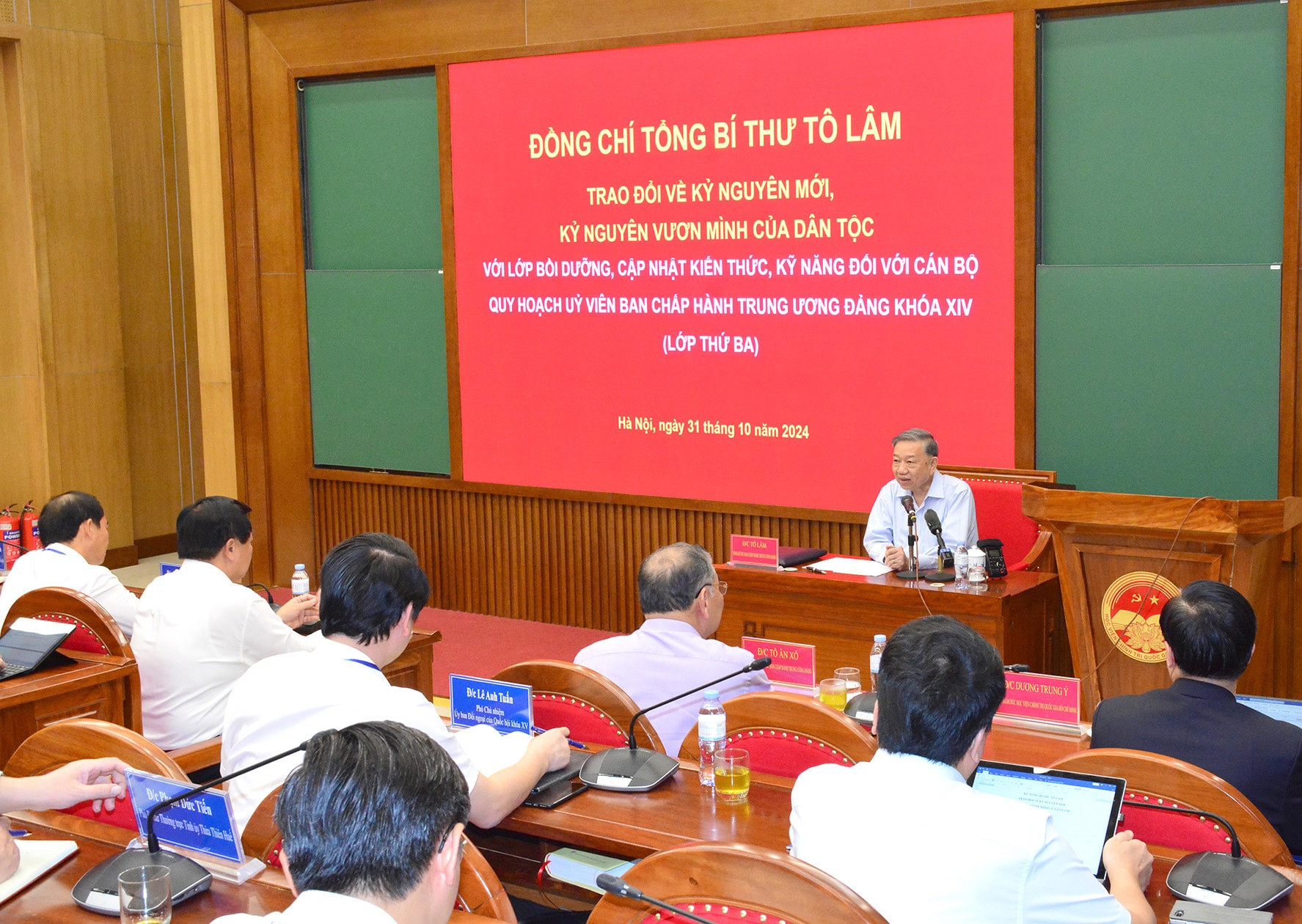
Implementing the Party’s policies and viewpoints on cadre work, many regulations have been issued demonstrating the consistency in the training and fostering of cadres of the Party and the political system. This includes consistency in functions tasks, target groups, and training content. Among these, the Ho Chi Minh National Academy of Politics and provincial and municipal political schools have the function and task of training and fostering cadres of the political system according to the management hierarchy. According to Regulation No. 214-QD/TW dated December 28, 2024, of the Politburo on the functions, tasks, and organizational structure of the Ho Chi Minh National Academy of Politics, “The Ho Chi Minh National Academy of Politics is a national center for training and fostering middle- and senior-level leaders, managers, and political theory scientists of the Party, the State, the Vietnam Fatherland Front, and socio-political organizations; a national center for training and fostering cadres, civil servants, and public employees, as well as training human resources at university and postgraduate levels”(5). The Academy performs functions and powers in the training and fostering of cadres of the Party and political system: training in political theory, undergraduate and postgraduate training; fostering and updating knowledge, skills, professional methods, training, etc. for cadres in accordance with Party regulations. Training and fostering content ensures consistency for each target group. Provincial political schools have the function of organizing the training and fostering of leadership and management cadres of the grassroots political system, as well as local cadres, civil servants, and public employees in political theory, professional expertise, state management knowledge, and position-based training, and so on.
The Party’s regulations are the political foundation to ensure consistency in the training and fostering of cadres and are the basis for nationwide implementation. On that basis, the training and fostering of cadres of the Party and the political system have consistency in terms of subjects, content, and programs. Currently, advanced and intermediate political theory training is carried out in a consistent and synchronous manner based on the standard curriculum compiled and published by the Ho Chi Minh National Academy of Politics. Training programs to update knowledge, skills, and expertise for cadres of the political system are implemented according to decentralization.
The target groups for political theory training courses are implemented under Regulation No. 57-QD/TW dated February 8, 2022, of the Secretariat on subjects, standards, and decentralization of political theory training.
The target groups for fostering and updating knowledge courses are implemented following Regulation No. 145-QD/TW dated May 10, 2024, of the Politburo on the regime for fostering and updating knowledge and skills for leadership and management cadres at all levels. Accordingly, for cadres planning to be members of the Central Executive Committee, the Ho Chi Minh National Academy of Politics coordinates with the Central Organizing Committee to organize such programs.
For provincial and district-level leadership and management positions, the Ho Chi Minh National Academy of Politics and its affiliated academies coordinate with the provincial and municipal Party Committees’ organizing committees to organize training courses. For grassroots leadership and management positions, political schools organize training courses. In other cases, based on local needs, the Ho Chi Minh National Academy of Politics, its affiliated academies, and provincial and municipal political schools organize training courses. The program content is consistent between the training and development facilities and local needs, ensuring a scientific and systematic nature, combining theoretical knowledge with discussion, linking theory with practice. Training and development methods are innovated under the motto “taking students as the center, lecturers as the driving force, and schools as the foundation”. In addition, the Ho Chi Minh National Academy of Politics also regulates the conditions and standards for the contingent of lecturers teaching political theory to ensure consistency in the training and fostering of cadres of the Party and the political system.
Thus, the Party’s regulations and the Ho Chi Minh National Academy of Politics express consistency in viewpoints, objectives, tasks, content, and forms of cadre training and fostering within the Party and the political system. From there, cadre fostering and training ensures consistency and systematization and has achieved many outstanding results. The content and program of political theory training programs are implemented rigorously and consistently, according to regulations, with the Ho Chi Minh National Academy of Politics as the presiding and compiling body.
From 2014-2024, the Academy has revised, supplemented, and updated the Party’s viewpoints into the system of 29 intermediate and advanced political theory textbooks(6), which serve as the basis for ensuring consistency in teaching nationwide. Decentralization of management in training and fostering cadres of the political system is strictly regulated. The Ho Chi Minh National Academy of Politics is assigned to preside over the organization of training courses for strategic-level cadres. In the 2014-2024 period, the Academy organized 03 training courses for members of the Party Central Committee, 02 training courses for alternate members of the Party Central Committee, organized training courses for the positions of deputy secretary, chairman of the People’s Council, chairman of the People’s Committee at the provincial level; 10 classes for cadres planning to become members of the Party Central Committee for the 12th and 13th terms(7). In 2024 alone, the Academy organized 03 training courses to update knowledge and skills for cadres planning to become members of the 14th Party Central Committee; 02 research programs and thematic exchanges with ministerial and deputy ministerial-level cadres; 02 research programs and thematic exchanges with district-level secretaries and equivalents(8). The training, fostering, updating knowledge and skills are gradually linked to positions, based on the planning and use of cadres, especially for strategic-level cadres. From 2019 to 2024, 76,679 cadres were trained in advanced political theory; 213,096 cadres were trained in intermediate political theory; 14,152 cadres in category 3, and 534,641 cadres in category 4 received training and knowledge-updating...(9). Systematic management in cadre training and fostering of the political system has been increasingly strengthened.
However, cadre training and fostering within the political system has at times and in certain places lacked consistency. Some localities and units organized leadership and management cadre fostering and knowledge-updating classes without proper authority; program content and fostering duration were not ensured according to regulations. Awareness of systematic management in cadre training and fostering among certain local Party committees and units has not been comprehensive or consistent.
2.2. Orientations to ensure consistency in training and fostering cadres of the Party and the political system in the new era
General Secretary To Lam affirmed: “The new era is an era of development, an era of prosperity under the leadership and governance of the Party, successfully building a socialist Vietnam. The destination of the era of rising up is a wealthy people, a strong country, a socialist society, standing on par with the world powers”(10). This is also an era that requires the productive forces to have strong development, “harmoniously combining humans and artificial intelligence”(11), while “the quality of human resources is still far from the requirements of national development in the new period, while training and fostering to improve the quality of human resources, especially high-tech human resources, is still a big challenge”(12). This is a requirement posed for the development of productive forces in general, and the training and fostering of cadres in particular. Therefore, to ensure consistency in the training and fostering of cadres of the Party and the political system, it is necessary to implement the following orientations:
Firstly, ensure strict implementation of the Party’s principle of unified leadership of personnel work and direct management of the staff.
The Communist Party of Vietnam is the only ruling party, leading through cadre work and through cadres in organizations of the political system. The Party’s unified leadership of cadre work and direct management of cadres is a principle and at the same time a prerequisite to ensure that the Party maintains its position and role in power. This is also the principle to ensure unity within the entire Party in terms of viewpoints, goals, and tasks of cadre training and fostering. On the basis of the consistent viewpoints of the Party, state agencies institutionalize them into regulations and rules, creating a unified political and legal basis for implementation. Party committees at all levels need to seriously grasp the viewpoints and policies of the Party, the policies and laws of the State on cadre training and fostering; Well implement authority and responsibility in discussing, agreeing and deciding on issues related to training and development programs and plans for each cadre position, and at the same time check and evaluate the quality of cadres after training and development.
Secondly, build a unified training and development strategy throughout the entire political system.
Resolution No. 26-NQ/TW identified tasks and solutions to continue renovating and improving the quality and effectiveness of personnel work, including: “Developing a national program on training and fostering cadres and learning foreign languages. Link planning with training and fostering according to position standards and promote the rotation of leadership and management cadres within the political system to practice in different fields and localities”(13).
As the country enters a new era, the cadre contingent of the Party and political system, especially leadership and management cadres, must have vision, thinking, deep expertise, proficient skills, professionalism, and the capacity to work in an international environment. Therefore, it is necessary to develop a strategy for training and fostering cadres to ensure comprehensiveness, synchronization, unity, and systematization, meeting the requirements and tasks of national development in the new era and the goal of building a cadre contingent with sufficient qualities, capacity, and prestige commensurate with their tasks.
The cadre training and fostering strategy must objectively and honestly assess the implementation of cadre training and fostering work, thereby determine the goals, tasks, and solutions for training and fostering cadres. Accordingly, based on the criteria, standards, and requirements of each group of cadre positions, especially strategic-level leaders and managers, it is necessary to clearly define the goals and orientations for training and fostering.
Training and fostering content must be comprehensive and practical in both theory and practice, focusing on in-depth training, improving political theory, updating knowledge, skills, experience, working methods, etc., for cadres, especially leaders and managers, to meet the requirements of digital transformation. Diversify forms and methods of training and fostering; focus on training, fostering, and testing cadres planned to participate in Party committees and standing committees at all levels, ensuring the selection of cadres to participate in executive committees and standing committees at Party committees, especially leaders with leadership capacity, high fighting spirit, daring to think, daring to do, daring to take responsibility, daring to renovate for the common good, having the capacity to lead the successful implementation of the Party’s guidelines and policies, and bringing the Party’s resolutions into practice in each field and locality.
The Party’s and political system’s strategy for training and fostering cadres needs to clearly define the authority and responsibility of each cadre training and fostering facility. Based on the national strategy, cadre training and fostering facilities develop training and fostering programs and content, and report to the competent authorities for approval.
Thirdly, unify the standards and conditions of the contingent of lecturers and speakers participating in teaching training and development programs.
The teaching staff is the force that directly determines the quality of training and development. Unifying the standards and conditions of the teaching staff is the basis for the teaching staff to strive, practice, and improve their capacity and qualifications, while at the same time building a professional and effective educational environment, ensuring consistency and synchronization in training and development work. Therefore, it is necessary to clearly define the standards and conditions of lecturers participating in each training and development program. In addition to the general standards of the staff, training institutions need to specify the standards and conditions of lecturers for each class. For lecturers teaching intermediate and advanced political theory, implementation must be in accordance with the regulations on standards and conditions of the Ho Chi Minh National Academy of Politics. For lecturers teaching training programs and updating knowledge for cadre positions, it is necessary to have unified regulations on specific standards and conditions, focusing on professional standards and based on learners’ evaluation of lecturers as criteria for selecting and assigning lecturers to teach appropriate training topics. Speakers with in-depth expertise in specific fields must be selected, especially for fostering programs for leadership and management cadre positions.
Fourthly, complete and implement regulations on systematic management in training and fostering staff
Systematic management overcomes the overlapping of functions and tasks, duplication of content and programs, wastefulness of resources, and at the same time creates unity and synchronization in the work of training and fostering cadres. Currently, the Party has regulated the functions and tasks of cadre training and fostering institutions, in which the Ho Chi Minh National Academy of Politics is the national center for training and fostering mid-level and senior cadres, as well as political theory cadres; provincial and municipal political schools perform the function of training and fostering cadres at the grassroots level. On the basis of decentralization of functions and tasks, it is necessary to unify the framework of training programs according to the titles of leaders and managers and decentralize the authority to organize training classes according to the titles of cadres. Organize the system management of training and fostering. Unify the criteria for evaluating the quality of training and fostering. Build a database on training and development of staff, from which to review and identify training and development needs, to develop an implementation plan. Also, implement unified policies and regimes for training and development programs for staff.
3. Conclusion
Ensuring consistency in the training and fostering of cadres of the Party and the political system is an important task and also a continuous requirement for the entire Party. Therefore, it is necessary to ensure the maintenance of the leadership role of the Party and Party committees at all levels, from the Central to the grassroots level, and the proactiveness and positivity of training and fostering units. Synchronously implement solutions to ensure unity in the training and fostering of cadres to improve the quality of the cadre contingent, improve the efficiency, effectiveness, and performance of the political system in the new era.
_________________
Received: February 02, 2025; Revised: March 12, 2025; Approved for publication: March 20, 2025.
Author e-mail: baothi1963@gmail.com
Endnotes:
(1) Ho Chi Minh: Complete Works, vol.5, National Political Publishing House, Hanoi, 2011, p.509.
(2), (3) Resolution No. 26-NQ/TW dated May 19, 2018, on focusing on building a contingent of cadres at all levels, especially at the strategic level, with sufficient qualities, capacity, prestige, and equal to the task.
(4) Regulation No. 80-QD/TW dated August 18, 2022, on decentralization of cadre management and appointment and introduction of candidate cadres.
(5) Regulation No. 214-QD/TW dated December 28, 2024, of the Politburo on functions, tasks, and organizational structure of the Ho Chi Minh National Academy of Politics.
(6), (7) Read: 10 outstanding achievements of Ho Chi Minh National Academy of Politics in 10 years (2014-2024), https://lyluanchinhtri.vn, September 16, 2024.
(8) Read: Report at the Conference on summarizing training and fostering work in 2024 and directions and tasks in 2025 (Ho Chi Minh National Academy of Politics).
(9) Read: Draft Report of the 13th Party Central Committee summarizing Party building work and implementing the Party Charter on August 9, 2024.
(10) To Lam: “Basis for positioning development goals and strategic orientation to bring the country into a new era”, Nhan Dan Newspaper, No. 25193, November 1, 2024, p.2.
(11) General Secretary To Lam’s special topic on the new era - the era of national rise, Party Building Journal, November 1, 2024.
(12) Article by General Secretary and President To Lam on Digital Transformation, Party Building Journal, September 5, 2024.
(13) Resolution No. 26-NQ/TW dated May 19, 2018, on focusing on building a contingent of cadres at all levels, especially at the strategic level, with sufficient qualities, capacity, prestige, and equal to the task.

Under supervisory of: Ho Chi Minh National Academy of Politics
Editor in Chief: Assoc. Prof., Dr. Nguyen Thang Loi