
Gửi bình luận
Hủy
Gửi
Sun, 25/10/2026

Abstract: High-quality human resources are the center of modern production forces, and at the same time are the key endogenous driving force to ensure productivity, innovation, and national competitiveness. This article analyzes the role, current situation, and challenges in developing high-quality human resources in Vietnam today. On that basis, it proposes a system of solutions to develop high-quality human resources, contributing to the goal of making Vietnam a developing country with modern industry and a high average income by 2030.
DR. LE BA TAM
Institute of Political Economy,
Ho Chi Minh National Academy of Politics
1. Introduction
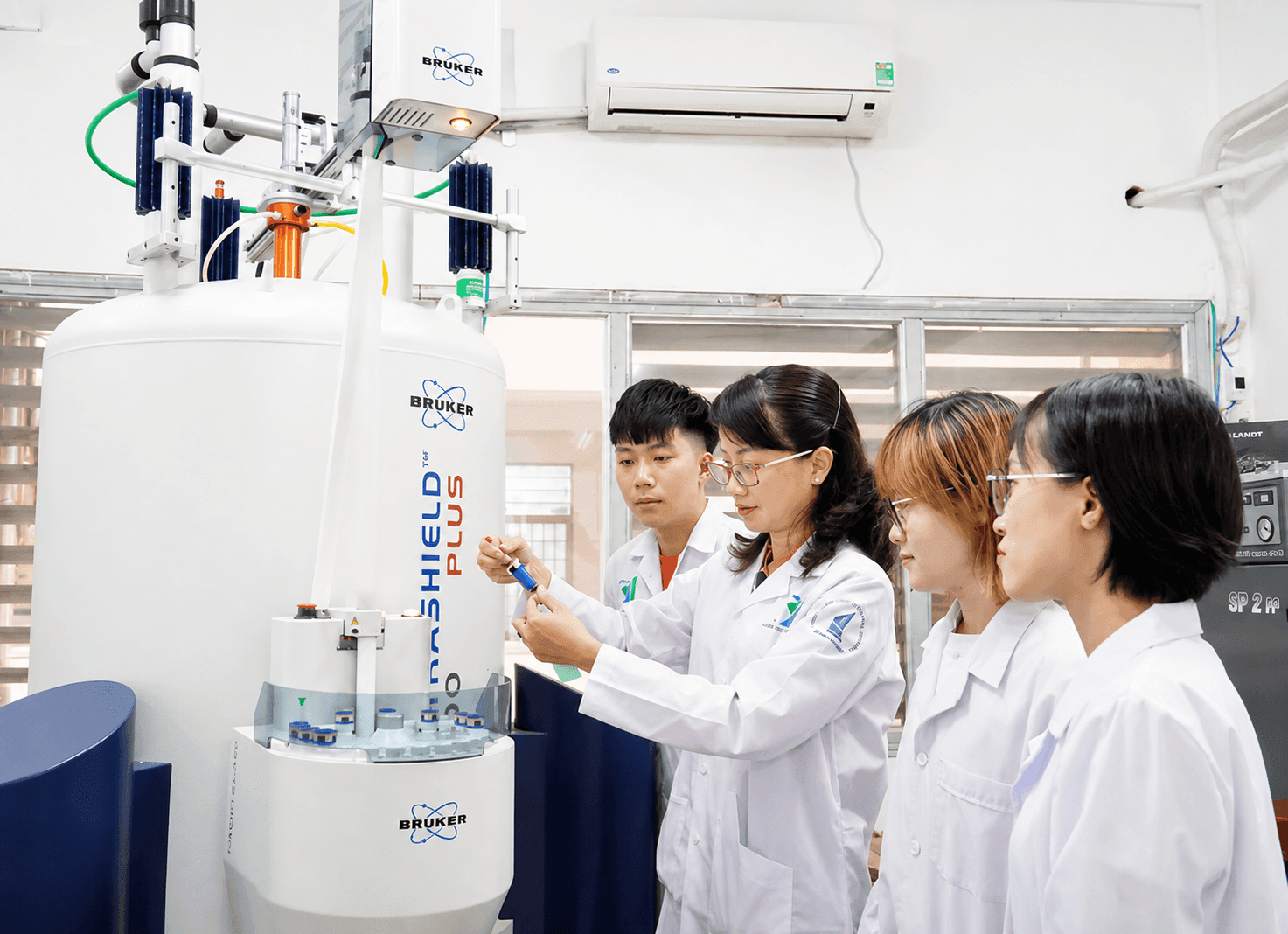
In the context of globalization, digital transformation, and Industrial Revolution 4.0, high-quality human resources are the key factor to promote labor productivity, economic growth, and innovation in development models. This is a force with professional qualifications, skills, creative thinking, and high adaptability to changes in technology and the global environment. It is also the subject that creates added value and leads innovation in production and business.
The 13th National Party Congress identified the development of high-quality human resources as one of three strategic breakthroughs, aiming to realize the goal of turning Vietnam into a developing country with modern industry and a high average income by 2030. This requires a shift from a development model based on resources and cheap labor to one based on knowledge, technology, and innovation.
However, developing high-quality human resources is linked to institutions, resource-use policies, and the social environment. Therefore, it is necessary to synchronously reform institutions, incentive policies, and an environment that encourages innovation to remove bottlenecks in human resource development.
2. Content
2.1. The role of high-quality human resources in industrialization and modernization
High-quality human resources are at the heart of modern production forces. In the context of the knowledge-based economy and digital economy, knowledge workers - with their qualifications, skills, and innovative thinking - have become the dominant factor throughout the entire production system. This is a high-level development of the human factor, not only operating but also creating technology, producing knowledge, and added value. Unlike simple workers, they work with critical thinking and creative skills - key factors that determine labor productivity.
In the context of deep international integration and growth model transformation, developing high-quality human resources is not only a technical requirement, but also a strategy to improve overall productivity, master technology, and increase national competitiveness. This is also the endogenous driving force of sustainable growth.
Unlike capital or resources, which are limited factors, high-quality human resources can be regenerated, spread, and generate long-term profits. In the global economy, the advantage no longer lies in low labor costs but in creativity, organization, and technology - all of which depend on the quality of human resources. This force is the core of the innovation ecosystem, helping to integrate knowledge into products, services, and business models. Countries such as Korea, Israel, and Singapore have affirmed that education, people, and science are the foundation for sustainable development.
For Vietnam, in the context of rapid population aging, improving labor quality is a decisive condition to seize opportunities for effective industrialization and international integration.
Developing high-quality human resources should be associated with reforming production relations. When the productive forces develop rapidly, especially intellectual human resources, it will inevitably lead to the need for reforming organization, distribution, and evaluation. If the distribution system is still based on “leveling” benefits and lacks transparency, it will hinder creativity and cause a loss of intellectual resources. Therefore, it is necessary to reform the institution alongside protecting the rights and fairly recognizing the contributions of this group.
In a socialist-oriented market economy, the State plays a proactive role in planning human resource development strategies, public investment in core technology sectors, promoting innovation, and ensuring equitable access to education, especially for disadvantaged groups. This is the foundation for expanding and improving the quality of human resources for long-term development.
2.2. The current status of high-quality human resource development in Vietnam
Results achieved
Vietnam has made great progress in human resource development. By 2024, the labor force aged 15 and over reached about 53.0 million people, an increase of 575.4 thousand people compared to 2023’s; the labor force participation rate reached 68.9% of the total population. Trained workers with degrees/certificates reached about 15 million people, accounting for 28.3%, an increase of 1.1 percentage points compared to that of 2023(1).
The situation of high-quality human resources in key technology industries is:
Information technology industry: in 2023, the whole country had 1,504,414 workers in the information technology industry, accounting for 2.8% of the total workforce aged 15 and over. Of which, hardware workers accounted for 63.1%, software workers 16.3%, information technology services 6.4%, digital content 1.4% and workers in trading and distributing information technology equipment 12.8%. Compared to 2022, the total number of workers in the information technology industry increased by 339,138 people, equivalent to an increase of 23.1%. Of which, the digital content group experienced strongest increase, reaching +486.9%; hardware workers increased by 2.3%; while on the contrary, software workers decreased slightly by 0.5%(2). These changes reflect the trend of human resource migration following the development of the digital market and the need to apply technology in new fields.
Biotechnology industry: the total workforce in the biotechnology industry is estimated at about 49,000 people, accounting for a small proportion of the total workforce in the science and technology industry but has been increasing rapidly in the past 5 years, especially in FDI enterprises and agricultural and biomedical technology startups.
In the field of agricultural biotechnology, the workforce is estimated at 20,000 people, mainly engineers working at research institutes, seed centers, and high-tech agricultural enterprises. The medical and pharmaceutical sector has about 18,000 people, including researchers, laboratory technicians, and experts in drug and vaccine development. Environmental biotechnology attracts about 7,000 people, working at monitoring centers, waste treatment plants, and environmental technology enterprises. Teaching and research activities account for about 4,000 people, who are lecturers and researchers at universities(3).
New materials technology is becoming one of the important pillars of the industrialization and modernization process, with a wide range of applications from construction, healthcare, energy to defense. As of early 2020, the total number of human resources being trained in the materials industry in Vietnam was 139,787 people, including: 134,171 university students, 4,525 graduate students, 1,091 PhD students(4). Leading technology corporations such as Vingroup, Phenikaa; along with large research facilities such as Hanoi University of Science and Technology, Vietnam Academy of Science and Technology, are investing heavily in research and development (R&D), with each unit owning from several dozen to several hundred specialized experts.
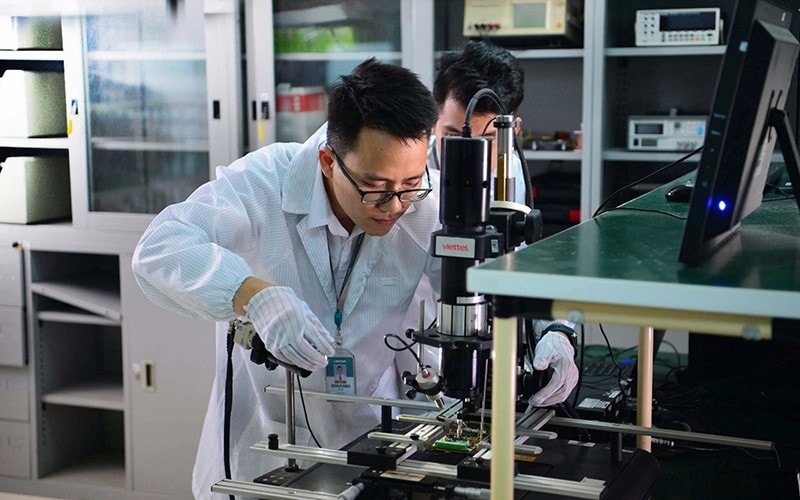
Automation and robotics technology are key areas of Industrial Revolution 4.0. In terms of human resources, the country currently has about 1,000-2,000 R&D engineers specializing in the fields of automation, robotics, and mechatronics, working at research institutes, universities, and technology development centers. In addition, thousands of technicians installing, operating, and maintaining robots are working at FDI factories, especially in the electronics, automobile, and refrigeration industries - where the level of automation is increasingly high.
Renewable energy technology and energy storage are among Vietnam’s strategic breakthrough areas. By 2023, Vietnam was among the leading ASEAN countries with about 20GW of installed renewable energy capacity. Green energy transition also entails a large demand for high-quality human resources. It is forecasted that by 2030, Vietnam will need 1.61-1.93 million workers in this sector, of which solar, wind, and biomass power alone can create about 315,000 jobs per year(5). This poses an urgent need for interdisciplinary skills training, from design, installation, maintenance to operation and smart energy management.
Limitations and challenges
The proportion of trained workers is still low. By 2024, there were nearly 38 million untrained workers (about 71-72%). Many core technology industries still suffer from serious human resource shortages.
In 2024, the semiconductor industry had a revenue of USD18.7 billion with 50 chip design enterprises. However, the whole country only has about 6,000 design engineers(6), while the demand is forecasted to be 50,000 engineers by 2030(7). Some training cooperation models with Intel and Qualcomm have been implemented but are still fragmented.
In the AI field, investment of more than USD 200 million from FPT - NVIDIA is promoting AI factory training; Qualcomm opened an AI R&D center in Vietnam, but human resources are still lacking in quality and quantity.
Regarding renewable energy, solar and wind power capacity is the highest in ASEAN. However, there is a shortage of engineers and human resources for operation and maintenance, affecting the progress of many projects.
Major challenges today include: shortage of engineers in core technology industries; unbalanced geographical distribution (over 76% of chip engineers are concentrated in Ho Chi Minh City(8)); the connection between schools - businesses - the State is still fragmented and unsustainable.
In short, Vietnam has initially formed a high-quality workforce in strategic industries. However, for this workforce to become a key driving force for growth and innovation, it is necessary to synchronously resolve bottlenecks in scale, training quality, and human resource ecosystem linkages.
2.3. Solutions for developing high-quality human resources
Faced with the requirement to transform the growth model based on science, technology, and innovation, Vietnam needs to synchronously implement solutions to develop high-quality human resources:
Firstly, to expand the scale and improve the quality of training core technology human resources.
It is necessary to increase the scale of undergraduate and postgraduate training according to orders and specialized zoning in strategic areas such as semiconductors, artificial intelligence, robotics, biotechnology, new materials, and renewable energy. The State and enterprises need to place orders directly with key schools (Hanoi University of Science and Technology, Hanoi National University, Ho Chi Minh City National University...) with a commitment to use human resources. Training is divided according to advantages: the Central Highlands prioritizes renewable energy; the Red River Delta develops big data and electronics - telecommunications.
Training programs need to be innovated towards integrating systems of both thinking and solving global work problems. Implement a dual-training model (combining school and business learning), with an interdisciplinary output framework including engineering, digital technology, data, foreign languages and professional ethics.
It is necessary to invest in key technical schools, support international standards (ABET, AUN-QA...), and expand cooperation with technology enterprises (FPT, Viettel, Samsung). Develop postgraduate and post-doctoral systems in core technology and encourage the establishment of interdisciplinary research institutes (AI, semiconductors, big data).
Some initiatives need to be implemented soon, such as training 50,000 core technology engineers by 2030 (of which 10,000 will meet international standards); developing a system of national skills certification; and including foundational subjects such as data science, sensors, embedded systems, blockchain, and artificial intelligence in high school and college curricula.
Secondly, develop high-quality human resources evenly in conjunction with restructuring the economic space.
The reallocation of high-quality human resources needs to be associated with administrative mergers, regional planning, and reorganization of urban-industrial spaces, to reduce pressure on large centers and promote the potential of new growth poles.
Re-plan the regional training network, form regional R&D and training centers with coordination between universities, governments, and businesses. Prioritize opening university branches or interdisciplinary education centers in regions with potential for developing agricultural AI, renewable energy, and logistics. Design policies to attract and rotate human resources alongside inter-regional development axes (North - South, Central Highlands - Coast, East - West), with incentives on settlement, study credits, and career opportunities.
Link training with regional functional positioning according to national planning, such as research - training regions (Hanoi, Ho Chi Minh City), innovative - creative regions (Central Highlands), logistics - processing regions (Mekong Delta).
Developing human resource ecosystems in regional centers, including smart dormitories, co-working spaces, startup - R&D centers, integrating vocational - college - university transfer programs. Building a regional digital human resource database, connecting with population data and the labor market.
Thirdly, strengthen the “4-subject” coordination mechanism in human resource development.
In the context of a knowledge-based economy and deep international integration, developing high-quality human resources requires a close cooperation model between the State - Schools - Scientists - Enterprises. The “4-subject” mechanism needs to be institutionalized into a national human resources management structure, ensuring clear allocation of responsibilities and benefits.
Roles need to be clearly divided: the State guides strategies and issues skill standards; schools provide interdisciplinary training; scientists develop advanced programs; businesses place orders and receive human resources, sponsor scholarships, and invest in R&D activities.
Establish binding mechanisms such as recruitment commitments, co-funding of research, and co-ownership of R&D results. Establish national and regional high-tech industry skills councils, with representatives from all four sectors, to develop occupational standards, skill frameworks, and training orientations.
Some examples of models that can be replicated include: the semiconductor industry with the participation of the Ministry of Science and Technology, Hanoi University of Science and Technology, Viettel, FPT, Synopsys; the renewable energy industry with the Ministry of Industry and Trade, energy engineering schools, Trung Nam Group, Siemens Gamesa, and so on.
A particular case is the Vietnam-Japan University: the Vietnamese government invests capital, Japan provides programs and lecturers, Japanese enterprises recruit and sponsor scholarships, and scientists participate in training and research. This model has contributed to the formation of a team of high-quality engineers, deeply integrated with the international labor market and strategic R&D projects.
Fourthly, completing national policies on developing high-quality human resources.
In the development orientation for the period 2025-2035, our Party identified science, technology, innovation, and high-quality human resources as key driving forces to promote industrialization, modernization, and enhance national autonomy. Resolution 57-NQ/TW dated December 22, 2024, requires the development of a national policy on high-quality human resources in a breakthrough, synchronous, and inter-sectoral direction.
It is necessary to develop a national strategy on high-quality human resources for the 2025-2035 period, clearly identify priority industries (artificial intelligence, semiconductors, biomedicine, new materials, etc.), distribute them by region and new administrative model; apply a set of professional skills and ethical standards following international practices. The goal by 2030 is to have at least 70% of high-tech workers with intermediate digital skills; 20% of engineers with international certificates; R&D human resources accounting for 2% of the total workforce; and TFP contribution reaching at least 50%.
Establish a national high-tech human resource development fund from the state budget, enterprises, professional associations, and international funding. The fund will support full scholarships, postgraduate training, attract overseas Vietnamese experts, sponsor student research and creative startups, with principles of public and transparent allocation, according to industry, region, and economic efficiency criteria.
Develop a high-tech labor market information system through an integrated national database from ministries, localities, schools, and businesses. Build an early warning model of skill shortages in fast-changing technology industries such as artificial intelligence, blockchain, robotics, etc., linked to industry forecasts and development space.
Fifthly, strengthen international integration in developing high-quality human resources.
In the context of deep integration and global competition, the development of high-quality human resources needs to expand to the international space. Resolution 59-NQ/TW dated January 24, 2024, affirms that high-quality human resources are the subject and at the same time the priority object in the international cooperation on innovation.
Promote international training and knowledge transfer linkages, expand dual degree training models between Vietnamese universities and strategic partners (Germany, Japan, Korea, the United States, Singapore, etc.). Develop “global universities” in Vietnam (such as Vietnam-Japan University, Vietnam-Germany University, etc.) and support domestic universities in training linkages in ASEAN and developed countries. Increase the invitation of international lecturers and experts to participate in training under flexible contracts and academic recognition.
Attract and promote global Vietnamese intellectuals through the network “Connecting global Vietnamese brainpower” and data on overseas Vietnamese experts in the high-tech field. Apply special treatment policies for overseas Vietnamese experts (international salary, experts, intellectual property rights, participation in national projects). Establish a fund to support overseas Vietnamese knowledge transfer, sponsor consultants, start-ups, and provide innovation consulting in the locality.
Mobilize Vietnamese experts at global technology corporations such as Google, Nvidia, TSMC, Bosch... to participate in training, consulting, and leading domestic R&D teams. Encourage cross-border work through legal corridors suitable for remote workers, intellectual property protection, and tax regulations, linked to the digital transformation of the high-quality labor market.
Positioning Vietnam in the global human resource training and utilization chain by building high-quality technical training centers to serve the export of skilled labor. Focus on industries such as information technology, nursing, mechatronics, and logistics. Negotiate the recognition of equivalent degrees and vocational skills in free trade agreements such as CPTPP, EVFTA... Strengthen cooperation with UNESCO, ILO, OECD on skill standards, labor productivity, and professional ethics, contributing to deep integration into the global knowledge labor market.
3. Conclusion
Vietnam has initially formed a high-quality human resource foundation in a number of key technology sectors such as information technology, electronics - telecommunications, precision mechanics, renewable energy, and digital healthcare. The team of engineers, experts, and researchers in these fields is increasingly well-trained and gradually participating in the global value chain.
However, developing high-quality human resources still faces systemic challenges such as limited training scale, uneven quality, and lack of effective linkages among the State, schools, scientists, and businesses in the renovation ecosystem.
To achieve the goal of becoming a developing country with modern industry and a high average income by 2030, it is necessary to identify the development of high-quality human resources as a fundamental strategic solution - a “breakthrough of breakthroughs” - to restructure the productive forces, improve productivity, competitiveness, and resilience of the economy in the new context.
Received: July 11, 2025; Revised: September 19, 2025; Approved for publication: September 24, 2025.
Author’s email: letamkt@gmail.com
Endnotes:
(1) General Statistics Office: Press release on labor and employment situation in the fourth quarter and 2024, Hanoi.
(2) Ministry of Information and Communications: White Book on Vietnam’s Information Technology Industry 2024, Information and Communications Publishing House, Hanoi, 2024, p.26.
(3) Ha Linh: “Building a human resource team in the biotechnology industry”, https://nhandan.vn, date: November 1, 2023.
(4) Central Economic Commission, Ministry of Science and Technology, Ho Chi Minh City National University: Proceedings of the Scientific Workshop: “Developing human resources in the materials industry to meet the requirements of industrialization and modernization of the country by 2030, with a vision to 2045”, p.129.
(5) Bui Van Huy, Ninh Van Nam: “Training and developing human resources in the field of renewable energy”, https://www.haui.edu.vn, date: December 10, 2023.
(6) Anh My: “Vietnam’s semiconductor industry revenue will reach nearly USD19 billion in 2024”, https://vietnambiz.vn, date: February 7, 2025.
(7) Trong Dat: “Despite paying thousands of USD in salary, Vietnam still lacks chip engineers”, https://vietnamnet.vn, date: April 18, 2024.
(8) Cao Tan: “Serious shortage of semiconductor human resources, https://nhandan.vn, date: December 10, 2023.
Under supervisory of: Ho Chi Minh National Academy of Politics
Editor in Chief: Assoc. Prof., Dr. Nguyen Thang Loi