
Gửi bình luận
Hủy
Gửi
Mon, 12/10/2026

DOI: https://doi.org/10.70786/PTOJ.2026.7090
Abstract: Australia is a country with many ethnic groups and many language groups, each ethnic group and each language group has its own cultural practices and beliefs. In Australia, immigrants are given the opportunity to integrate into society and encouraged to contribute to the development of a prosperous, multicultural, multi-ethnic country. This article provides an overview of Australia's multicultural policy and the current method of disseminating Australia's multicultural policy through radio and television.
MSc. TRAN BAO CHAU
Diplomatic Academy of Vietnam
1. Introduction
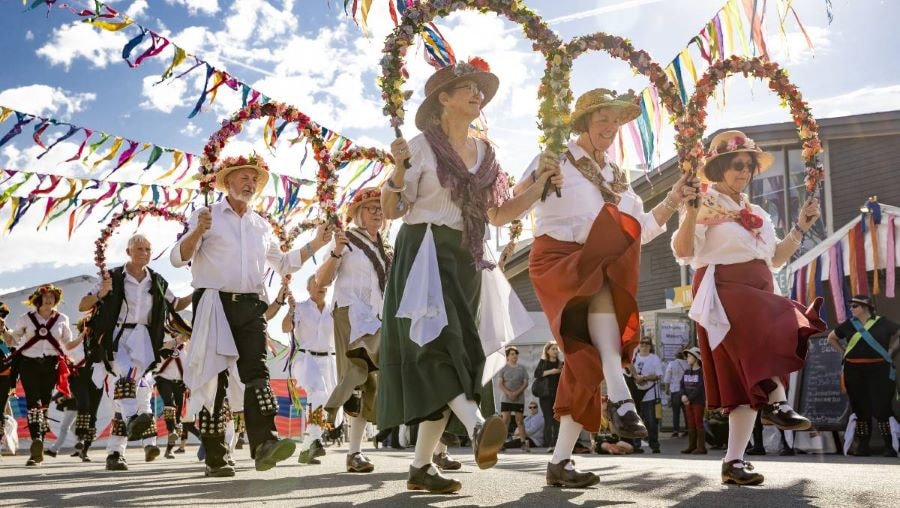
Australia is widely regarded as one of the world’s most successful multicultural societies. It has welcomed people from diverse backgrounds to settle in the country. As such, Australia represents a melting pot of cultures, beliefs, and traditions. Its cultural diversity is underpinned by shared values and a commitment to freedom, security, and prosperity. This is reflected in the Multiculturalism Declaration, 2017(1).
Cultural exchange has had many positive impacts on the development of infrastructure, the vitality of communities, the cultural richness, and economic opportunities of the country. Furthermore, the multicultural experience broadens the global perspective and encourages the international integration of the country. The establishment of shared obligations between government agencies, communities, and individuals - regardless of their national origin - has strengthened the development capacity of Australian society and promoted a common sense of belonging, solidarity, and development. These collaborative efforts have led to great successes in building a prosperous, modern Australia, characterized by shared cultural values, rights, and responsibilities. These issues are clearly reflected in Australia's multicultural policy.
2. Overview of Australia's multicultural policy
One is the process of building Australia's multicultural policy (2)
In 1973, Immigration Minister Al Grassby under the Gough Whitlam Government issued a consultation paper titled “A Multicultural Society for the Future”, and it was formally adopted in 1975, at the promulgation of the “Racial Discrimination Act 1975”, Prime Minister Whitlam identified Australia as a “multicultural nation”.
The 1977 report entitled “Australia – a Multicultural Society” recommended that Australia adopt a multicultural policy and the first multicultural policies were implemented in 1978, reaffirmed in subsequent years: 1989 (Department of Immigration and Multicultural Affairs 1989), 1996 (Department of Immigration and Multicultural Affairs 1997), 1999 (Department of Immigration and Multicultural Affairs 1999, and 2003 (Department of Immigration and Multicultural Affairs and Department of Immigration 2003). In 2003, the Australian Government issued the document “Multicultural Australia: Unity in Diversity”, which set out the strategic direction for the next three years. This policy statement was updated in 2011 with the launch of the Multicultural Policy “Australians” (Department of Immigration and Multicultural Affairs and Citizenship 2011). This policy introduced the Australian Multicultural Council, an independent body that replaced the Australian Multicultural Advisory Council to advise on policies and current issues relating to diversity and multiculturalism (Commonwealth of Australia 2011). Australian policy has shifted in recent decades from a language of multiculturalism to one of diversity, social cohesion, and inclusion (Department of Immigration and Citizenship 2009).
Although responsibility for multicultural policy has traditionally been the province of the Department of Immigration and Citizenship, responsibility was transferred to the new Department of Social Services in 2013. The most recent policy on multiculturalism was introduced by the Turnbull Government in March 2017 and is seen as one of the most significant changes to Australia’s multicultural policy agenda.
At the sub-national level, all states have a policy, agency, or ministry responsible for multiculturalism. In some cases, multiculturalism is implemented through a policy framework (e.g., the Northern Territory’s Diversity Buildings Act), while other states have affirmed multiculturalism through legislation (e.g., the New South Wales Community Relations Commission and Multicultural Principles Act; Victoria’s Multicultural Victoria Act) or a charter (e.g., Western Australia’s Multicultural Charter).
Arrangements at the local level vary, although generally multicultural principles are incorporated into local mandates. For example, the state of New South Wales requires local governments within its jurisdiction to develop access and equity initiatives targeting minority communities. They recommend the use of the state’s multicultural planning framework (Community Relations Commission 2009).
Meanwhile, the Western Australian Government’s Multicultural Interest Office has been housed within the Department of Local Government, Sport and Cultural Industries since 2009, clarifying the institutional link between cities and multiculturalism (Multicultural Interest Office 2020).
Secondly, some basic contents of Australia's current multicultural policy
In March 2017, Australia’s latest Multiculturalism Statement was titled “A Multicultural Australia – United, Strong, Winning”. This is a policy statement released by the Australian government to reaffirm and update the country’s approach to multiculturalism. The key points to clarify this statement are(3):
“ - Core principles: Shared values of respect, equality, and freedom; English as the national language; rule of law; democracy and “fair play” for all.
Key themes: Celebrating diversity as a source of strength; the economic and social benefits of multiculturalism; a commitment to national safety and security; the importance of integration and social cohesion.
- Focal areas of policy: Promoting participation in society and the economy; harnessing the benefits of diversity; maintaining social cohesion and national security.
- Historical context: Recognition of Indigenous Australians as the first people; Recognition of the waves of migration that shaped modern Australia
- Vision for the future: A harmonious and inclusive society; embracing diversity while maintaining a common national identity”.
This statement reaffirms Australia’s commitment to multiculturalism while addressing concerns about social cohesion and national security. The Australian Government emphasises the importance of shared values and active citizenship, and celebrates the diverse cultures within Australia.
In communicating its multicultural policy, the Government has used a variety of communication methods, targeting different target groups, to achieve communication effectiveness in many criteria. Overall, the Australian Government's message on the 2017 Multicultural Declaration "Multicultural Australia: United, Strong, Winning" focuses on reinforcing the country's commitment to a diverse and inclusive society, while emphasizing shared values and national security. To disseminate this message, the Australian Government has used a multi-platform, multi-modal approach to promote the key messages of its multicultural policy.
Among the various methods that the Government uses to disseminate multicultural policy, including the method of communicating multicultural policy through mass media, one of the popular methods is radio and television. Mass media play an important role in communicating policy by shaping public perception, disseminating information, and facilitating dialogue at all levels. Mass media play an important role in policy dissemination as well as monitoring and evaluating policy implementation and outcomes. It is both a bridge between policy makers, multicultural communities, and the general public; and it creates an environment for the multicultural policy topic to be understood, debated, and implemented throughout society. Radio and television are one of the main channels, with wide coverage to many classes of people, helping to popularize the content of the Government's policies, and continuously updating news, events, ... or stories related to multiculturalism. The Australian Government has used this media channel very effectively in the propaganda work on its multicultural policy.
3. Australian radio and television media conduct multicultural policy communication
One is the Special Broadcasting Service (SBS)
Established in 1978, SBS is Australia’s free-to-air multicultural broadcaster and a leading player in the nation’s media landscape, inspiring Australians to explore, respect, and celebrate our diverse world. SBS provides multilingual, multicultural and Indigenous radio, television and digital media services that inform, educate and entertain everyone, reflecting Australia’s diverse society. From its first multilingual radio programs in the 1970s, SBS has grown into a comprehensive multicultural and Indigenous media organisation.
Today, SBS is a globally unique, renovative, and multi-platform national broadcaster, adapting to meet the needs of Australia’s increasingly diverse communities. Today, SBS provides a range of media services, including: Six free-to-air television channels; an audio content network serving over 60 diverse communities in their own languages; and renovative digital services, including the SBS On Demand streaming platform, which delivers a wealth of live programming and channels to people anytime, anywhere. SBS has a vital role to play in the future of multicultural Australia. Our multi-platform media and culturally and linguistically diverse digital services are unique assets and advantages for SBS and the Australian Government. Furthermore, in the current context, when misinformation and fake news are rampant, along with AI-generated content that is popular with unpredictable quality and reliability, SBS also demonstrates an extremely important responsibility in providing and verifying truthful information through many different forms of news and in many languages.
SBS Radio (4)
SBS Radio is the world’s most linguistically diverse public radio broadcaster – delivering news, current affairs and cultural engagement in 68 languages across radio, online, digital television, social media and podcasts. SBS Radio provides a community service to the nearly 5 million Australians who speak a language other than English at home. In addition, to promote cultural diversity, SBS Radio has three music channels broadcasting music and pop culture content from around the world. As Australia’s longest-running contracted settlement services provider, SBS and SBS Radio are uniquely positioned to create value and meaning in the lives of refugees, migrants, asylum seekers, international students, and the wider community in and outside Australia.
“Australia Explained” program”(5)
The predecessor of the program 'SBS Settlement Guide' (SBS Settlement Guide Program) is aimed at the community of new migrants to Australia, with the aim of helping them orient their life in Australia, by providing authentic and useful information on health, housing, work, etc., in more than 50 different languages, including Vietnamese.
As part of the SBS On Demand streaming platform, Australia Explained, or SBS Settlement Guide, was launched in 2016. For eight years, SBS journalists have produced weekly episodes of the Settlement Guide across radio, podcast, and digital platforms. These episodes are available free of charge via YouTube, SBS Radio, and more. The SBS Settlement Guide is designed to enable new migrants and refugee families and communities to actively participate in Australian civic, economic, and cultural development.
The programme aims to help new residents to Australia feel welcome and develop a sense of belonging to their community, country, and region. To do this, SBS journalists focus on creating content covering topics ranging from how to get a job, how to protect your home against natural disasters, how Australian politics work, joining a sports club, and everything in between.
Inclusion program (6)
SBS is one of the founders of Inclusion - a training program that aims to create diverse and inclusive work environments, where every individual can feel free, comfortable, and safe to be themselves, and where the diversity that a person brings to the workplace, contingent or organization is not only accepted but also celebrated and utilized. Building and bringing tolerance and harmony into the workplace requires a company-wide approach, in which each individual has a role to play.
The Inclusion program is designed to provide all types of workers with core skills and knowledge about inclusion in general and specifically about some other aspects of diversity: Indigenous, LGBTIQ+, gender equality, cultural diversity, disability, and generational diversity. The courses are engaging online learning experiences. They tell real stories, create empathy, make complex information understandable, and provide practical things that everyone can do. The content is mainly provided in the form of short films and animations to help viewers understand the concepts related to diversity and integration of social communities; video interviews of real people with scholars and managers of various diverse community groups. In addition, the program is supplemented with practical activities for learners to think and analyze themselves and their personal circumstances. Additionally, additional reading sections provide more detailed information on specific topics.
In fact, allowing diversity and inclusion in the workplace is no longer a choice – it’s a necessity, as society becomes more connected and diverse. A growing body of research shows that organizations that embrace and promote diversity and inclusion outperform those that don’t. For companies, this can be measured in improved profits and return on equity. For others, it’s about tangible results in the growth of the diverse communities they serve.
Secondly, the Australian Broadcasting Corporation (ABC)
The Australian Broadcasting Corporation (ABC) is Australia's national broadcaster. The ABC is funded primarily by direct grants from the Australian Government and is managed by a government-appointed board. The Australian Charter requires the ABC to inform, educate, and entertain Australians, and to share Australian culture and views with the world(7).
In recent years, the ABC has implemented a number of strategies such as the Five Year Plan of 2023-2028, the Reconciliation Action Plan 2023-2026, or the Diversity, Inclusion, and Belonging Plan 2023-2026 to “contribute to a sense of national identity” and “reflect the cultural diversity of the Australian community”. In these strategies, the ABC has embraced the rich and diverse nature of Australian society in both its workforce organization and its communications. To raise awareness of the wide range of communities and cultures within Australia.
ABC's Diversity, Inclusion, and Belonging Plan 2023–2026
The ABC aims to fulfil its role as “the media service for Australians” by telling stories about Australia. The stories cover every aspect of Australia, its people and its values, and demonstrate who we are in Australia. “We are all different because of our experiences and circumstances,” the ABC says. “Our differences stem from characteristics such as ethnic and cultural identity, gender expression, visible and invisible disability, sexual orientation, age, socioeconomic circumstances and geographic location. For each person, identity stems from the unique intersection of these characteristics… Diversity cannot thrive without an inclusive culture”8).
ABC's Diversity, Inclusion, and Belonging Plan 2023-2026 includes five foundational pillars:
• Inclusion in practice
• Diverse workforce
• Inclusive content, products, and services
• Connecting with Indigenous and diverse communities
• Accountability and transparency.
Of note is the ABC’s annual Heywire program, which actively seeks to provide young people in regional Australia with a platform to share their stories. In addition, the ABC is committed to continuing to implement initiatives to address any difficulties and challenges to the inclusion of culturally minority communities in Australia. Specifically, the ABC reaches 80% of the community each month through: AM radio; digital platforms; dedicated children’s content on television and online, etc.
Mother Language Project (9)
The Mother Tongue Project is part of First Languages Australia's national communications strategy, which aims to raise awareness of Australia's first language among the wider Australian public - people from many different nationalities and ethnicities who have settled in Australia.
In 2011, First Languages Australia approached ABC Open with a project proposal to showcase Aboriginal and Torres Strait Islander languages and share media skills with language workers across the country. The First Languages project has provided an opportunity for the stories of Australia’s many First Languages to be told to the world in the voices of each community. Over 100 films have been made, sharing over 60 languages. ABC Open producers at each of the 50 ABC regional stations have worked with members of their local language groups to help share their stories. The project formally ran for 12 months in 2014 and 2015, although the relationships built have seen films continue to be made and added to the collection. The films were then shared across social media, broadcast, and on-demand platforms by the ABC, ITVC, IndigiTube, and First Languages Australia. They were shared on Gambay (www.gambay.com.au), the national language map, and could be embedded into news stories from the ABC Mother Tongue YouTube Playlist.
This collaboration has created strong relationships and a deeper understanding of local Indigenous language communities. The project has seen a marked increase in media engagement and discussion of Indigenous language projects and activities, even beyond the confines of Mother Tongue.
ABC Media Academy Program 2025 (10)
Over the years, the ABC Media Fellows Program has been developed to identify and develop new talent with new approaches to content creation. The program is specifically targeted at groups traditionally underrepresented in the media industry and is designed to help them overcome traditional barriers to entry into media organisations. This approach has the mutual benefit of allowing the ABC to connect with underrepresented groups and add energy, ideas, and renovation to the future workforce. The positive results of the first Media Fellows Program in 2018 were evident almost immediately. Within four weeks of starting with the ABC, the Media Fellows were contributing to content creation through a range of activities, including writing articles, recording interviews, and assisting with television recordings. At the end of the program, most fellows were offered the opportunity to continue securing employment with the ABC.
The ABC is committed to diversity and inclusion in the workplace, and Australia promotes a culture of opportunity. Through its services, the ABC seeks to represent, connect, and engage with the Australian community. The ABC strongly encourages applications from Indigenous Australians, individuals from culturally and linguistically diverse backgrounds.
4. Conclusion
Australia has had great success in developing, implementing, and communicating a multicultural policy that brings together communities from different countries, cultures, religions, and traditions. The Australian Government recognises that respecting and celebrating multiculturalism is vital to building a prosperous, modern Australia characterised by shared values, rights and responsibilities. Based on the 2017 Multicultural Declaration entitled "A Multicultural Australia - United, Strong, Successful", the Australian Government, in general, and relevant organisations, groups, and individuals have carried out a number of policy communications to raise awareness, attitudes, and call for action towards the people. This includes the communication of multicultural policies in educational institutions, in press agencies, and in the mass media. From the projects, plans, and strategies that have been implemented, many experiences can be replicated for countries with the same characteristics of multi-ethnicity, multi-religion, and diversity in ethnic cultural nuances to contribute to improving the effectiveness of multicultural communication in schools and in the field of journalism and media.
_________________
Received: December 17, 2024; Reviewed: December 20, 2024; Approved for publication: December 24, 2024.
Author e-mail: tranbaochau@gmail.com
(1)Australian Government 2017, “Australia's multicultural statement: Multicultural Australia - United, Strong, Successful", Australian Government Department of Home Affairs, available at, https://www.homeaffairs.gov.au/mca/Statements/english-multicultural-statement.pdf.
(2) Homepage n.d., “Our history - Multicultural affairs", Australian Government Department of Home Affairs, available at, https://www.homeaffairs.gov.au/about-us/our-portfolios/multicultural-affairs/about-multicultural-affairs/our-policy-history.
(3) Australian Government 2017, “Australia's multicultural statement: Multicultural Australia - United, Strong, Successful", Australian Government Department of Home Affairs, available at, https://www.homeaffairs.gov.au/mca/Statements/english-multicultural-statement.pdf.
(4) Homepage 06/12/2021, ‘SBS Radio', Multicultural Australia, available at, https://www.multiculturalaustralia.org.au/news/sbs-radio/.
(5) Homepage n.d., ‘About the program', SBS, available at, http://www.sbs.com.au/settlementguide.
(6) Homepage n.d., “About the training program”, Inclusion, available at, https://inclusion-program.com.au/training_program.
(7) Homepage n.d., ‘About the ABC', ABC, available at, https://www.abc.net.au/about.
(8) ABC 2023, ‘Diversity, Inclusion & Belonging Plan', ABC, available at, https://www.abc.net.au/corp/dib-plan-2023-2026/img/DIB-Plan.pdf.
(9) Homepage n.d., ‘Mother Tongue with ABC Open', First Languages Australia, available at, https://www.firstlanguages.org.au/mother-tongue.
(10) Homepage 2024, ‘ABC News Cadet 2025 Program, ABC, available at, https://www.abc.net.au/careers/upstart-entry-level-programs/abc-news-2025-cadet-program/102951838.
Under supervisory of: Ho Chi Minh National Academy of Politics
Editor in Chief: Assoc. Prof., Dr. Nguyen Thang Loi