
Gửi bình luận
Hủy
Gửi
Wed, 21/10/2026

DOI: https://doi.org/10.70786/PTJ.V44.2069
Abstract: Industrial Revolution 4.0 has created many social changes within the working class, with the increase in the number of highly skilled workers and those working in the service sector, promoting the shift of labor from traditional occupations to new occupations that require higher qualifications. This has led to changes in the scale, and quality of labor, as well as the social structure of the working class in recent times.
Assoc.Prof.,Dr. HOANG THI NGA
Dr. VU THI BICH NGOC
Trade Union University
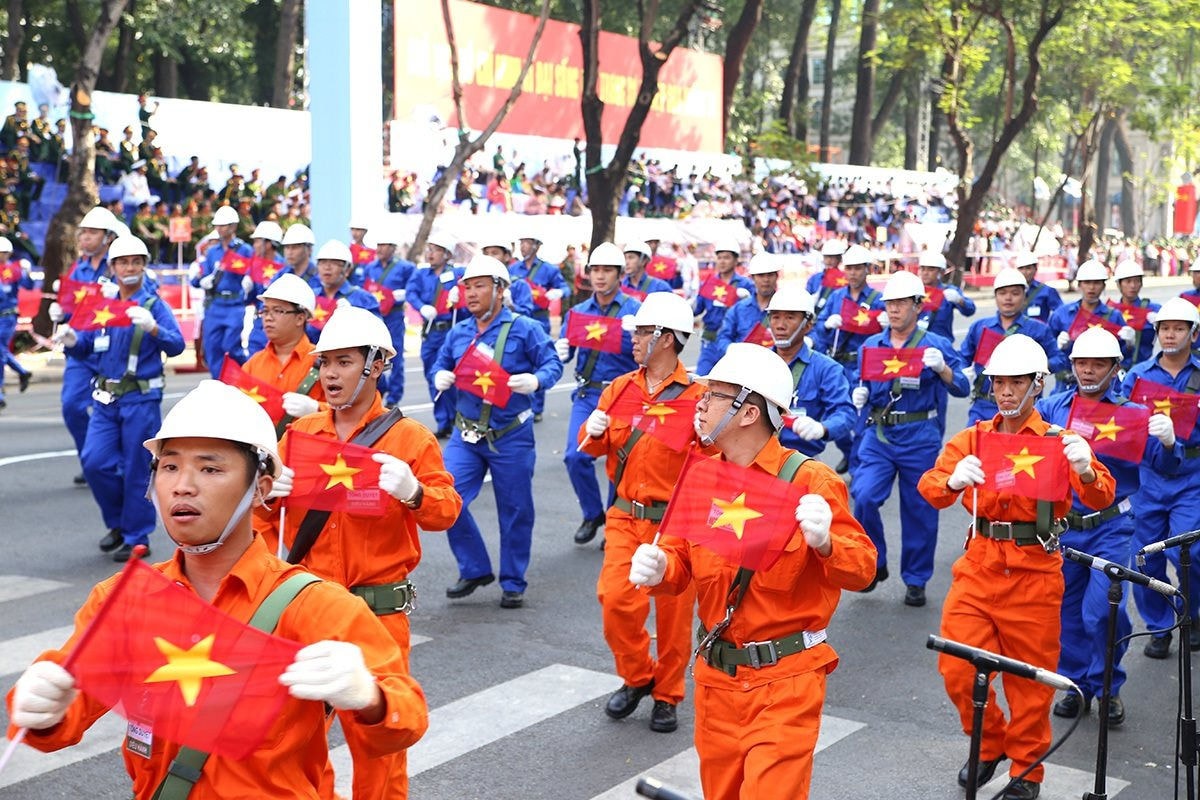
1. Introduction
Industrial Revolution 4.0 has created profound changes in all aspects of social life, especially in the fields of production and labor, including the working class. This requires the attention of the Party and the State in defining policies, issuing labor policies, as well as organizing trade union activities to support and strongly develop the role of the working class - the main labor force in the country’s socio-economic development.
One of the key features of Industrial Revolution 4.0 is the capacity of manufacturing systems to automate and self-optimize, minimizing human intervention, improving efficiency and reducing costs. The use of artificial intelligence and machine learning allows manufacturing systems to not only operate according to pre-programmed rules but also learn by themselves, analyzing big data to make smarter decisions. This not only increases productivity but also opens up opportunities for developing new business models, from real-time demand-based manufacturing to personalized after-sales services.
In addition, Industrial Revolution 4.0 also marks a breakthrough in connecting and sharing data, creating a globally linked production environment where information is transmitted and processed instantly among different systems around the world. This connection helps businesses optimize their supply chains, shorten the time to market and enhance their competitiveness in the context of globalization. However, along with these benefits are huge challenges in terms of cybersecurity, data security and maintaining a qualified workforce to meet increasingly high technical requirements. The characteristics and requirements of Industrial Revolution 4.0 have impacted changes in the scale and quality of the workforce in general and the social structure of the working class in particular.
2. Transformation of the social structure of the working class under the influence of Industrial Revolution 4.0
At the 6th Central Conference of the 10th tenure, our Party issued Resolution No. 20-NQ/TW dated January 28, 2008, on continuing to build the Vietnamese working class. The Resolution defines the Vietnamese working class as: i) manual and intellectual laborers who work for wages in various forms of industrial production, business, and service, or in production, business, and services of industrial nature. Among these, the most important criterion for identifying workers as belonging to the working class is industrial labor-directly involved in or participating in industrial production or in production, business, and services of an industrial nature.
The transformation of the social structure of the working class is part of broader social change and the transformation of the social stratification structure in our country. It represents a change from the past in terms of how the working class is socially organized, the structure of worker groups, and the nature and level of the working class’s social relations.
The transformation of the social structure of the working class according to industry, profession, and economic sector
The Vietnamese working class is currently working in almost all fields, occupations, and economic sectors, directly participating in the operation and production of the main materials of society. Presently, the structure of Vietnam’s working class in economic sectors includes: industry, manufacturing (51.33%); construction (9.24%); trade, services (27.92%); transportation (4.63%); other sectors (6.88%)(1).
By economic sectors, workers have now concentrated mainly in domestic private enterprises (58.14%), foreign-invested enterprises (35.25%) and state-owned enterprises (6.61%)(2). The increase in the number of the working class in Vietnam in recent years is mainly due to the development of the industrial, service, and tourism sectors in all economic sectors, with a significant contribution from the non-state sector. This is the area with the fastest growth in worker numbers.
Over the past 10 years, the working class has grown rapidly in number. In 2009, the working class was more than 8.92 million people(3), accounting for 10.2% of the population and 18% of the social labor force(4). By 2022, this class segment had increased to more than 15.3 million people(5), accounting for 15.3% of the population and 29.3% of the total social labor force(6).
In the context of the strong science and technological development , workers in non-state enterprises, especially enterprises with foreign investment capital, are increasing rapidly. In contrast, the number of workers in state enterprises has shown a declining trend.
In 2009, the number of workers in state-owned enterprises was nearly 1.74 million people (19.45%), in non-state enterprises was nearly 5.27 million people (59.03%) and in foreign-invested enterprises was 1.91 million people (21.52%)(7).
By 2022, the number of workers in state-owned enterprises was more than 1 million people (6.55%), non-state enterprises was more than 9 million people (59.20%) and foreign-invested enterprises was nearly 5.3 million people (34.25%)(8). The number of workers in state-owned enterprises declined due to restructuring and equitization processes.
Workers in non-state economic sectors and foreign-invested enterprises have increased sharply due to the impact of Vietnam’s increasingly deep international integration process, leading to a rapid rise in the number of such enterprises.
The current diversity in the structure of the Vietnamese working class, in addition to the impact of multi-sector economic policies, is also affected by occupational restructuring.
The data in Table 1 shows that from 2009 to 2022, the number of workers in agriculture, forestry, fishery, mining and construction enterprises decreased; in contrast, the number of workers in processing, manufacturing and service enterprises increased rapidly. This also accurately reflects the impact of global and domestic socio-economic developments.
The data in Table 2 shows that the labor structure has changed in the direction of reducing the proportion of labor in agriculture from 62.7% (in 2001) to 48.7% (in 2010) and 27.6% (in 2022); the size of the agricultural labor force has decreased by 10.369 million people (from 24.469 million people in 2001 to 14.1 million people in 2022).
The labor structure has tended to shift from agriculture to industry and services: the proportion of workers working in the service sector increased from 22.8% (in 2001) to 29.6% (in 2010) and 39.1% (in 2022). In the period 2010 - 2022, the number of workers in this sector increased by 5.377 million people, mainly workers in the fields of tourism services, transportation and warehousing, e-commerce, real estate business, and so on.
The transformation of the social structure of the working class according to level of education and professional qualifications
Under the influence of socio-economic development, international integration - especially Industrial Revolution 4.0 and the requirements of national digital transformation - “the educational quality, level, and professional skills of workers are increasingly improved; the intellectualization of workers, especially young workers, has become an inevitable objective trend”(10). During the renovation period, along with the industrialization and modernization process, our country’s working class has undergone important changes. Currently, the Vietnamese working class is a large social force with about 14.8 million people, accounting for more than 14% of the population and more than 29% of the total labor force in society(11). The Vietnamese working class has continuously grown, with a portion possessing high educational and professional qualifications, participating in complex material production fields with intellectual content embodied in high-quality products in sectors such as electronics, petroleum, telecommunications, electricity, automation engineering, processing industries, chemical technology, biotechnology, and other high-tech industries.
The structure of the working class by educational level and professional qualifications has changed in the direction of reducing the proportion of workers with high school degrees and increasing the proportion of workers with college and university degrees. The proportion of workers with high school degrees decreased from 88.4% (in 2009) to 43% (in 2018). Meanwhile, the proportion of workers with intermediate-level and college degrees increased sharply from 7.7% (in 2009) to 33.5% (in 2018). This change is due to the development of the vocational education and training system, the university and postgraduate education system, creating opportunities for workers to study and improve their professional qualifications and skills, thereby contributing to meeting the demand for skilled human resources for the process of industrialization and modernization of the country.
Currently, 90% of workers in enterprises have secondary and high school degrees, of which about 50% are high school graduates. Of the total labor force in our country, about 26.4% have undergone training, including 15.6% with college or university degrees(12). By technological qualifications, within the processing and manufacturing industry alone, workers with high level of technological qualifications account for 21.87%, and workers with a medium level of technological qualifications account for 14.68%(13).
Thus, as the socio-economy develops-especially with the emergence and growth of the knowledge economy and digital economy-the proportion of low-skilled, simple laborers has decreased, replaced by an increasing number of intellectualized workers with higher educational and professional qualifications. It is forecast that the proportion of intellectualized workers with college or university education will increase rapidly and account for about 35-40% of the total number of workers by 2030(14).
According to the survey results of the Institute of Workers and Trade Unions in 2020 on knowledge, qualifications and expertise of workers in the trend of Industrial Revolution 4.0, in labor-intensive industries, the proportion of workers with high school qualifications is 66.2%, with lower secondary qualifications is 31.5% and primary qualifications is 2.3%. The proportion of workers in the garment, electronics and footwear industries with professional qualifications and skills is also lower than in other industries: untrained workers make up 56.5%, workers with intermediate qualifications account for 22.4%, 10.6% of workers have college qualifications and 10.5% of workers with university qualifications(15).
By 2021, the total number of wage workers in all types of enterprises in Vietnam was about 24.5 million people, of which workers in enterprises accounted for about 60%, equivalent to 14% of the population and 27% of the social labor force. The educational level, professional qualifications, vocational skills, and political awareness of the working class are increasingly improving. The number of intellectual workers who master advanced science and technology has risen. A young generation of workers has formed with educational and cultural background, vocational training according to professional standards, and practical training in modern production environments, with increasingly advanced working methods.
In addition to professional qualifications, vocational skills are also an important factor in helping workers adapt to the trends of Industrial Revolution 4.0. Accordingly, the skills that workers need to have include: critical thinking, people management, cooperation and negotiation; customer service and care; leadership and management; skills to solve complex problems; business, communication and decision-making skills. However, in reality, the rate of workers meeting the requirements of the above skills is still very limited. Faced with the requirement to transform the economy towards growth based on science and technology, requiring high-quality human resources, the overall quality of the Vietnamese working class, and particularly the vocational skills of workers, still shows many shortcomings.
Thus, although the professional level of workers has increased in recent years, in general, the growth rate is still relatively slow, not keeping up with the demands of the labor market, not meeting the requirements of the industrialization, modernization of the country and international integration.
Transformation of working-class social structure by region
The social structure of the Vietnamese working class varies between economic regions and localities.
The data in Table 3 shows that, in general, the number of workers in all regions has increased. In particular, the number of workers increased fastest in the Red River Delta region, especially in provinces and cities that attracted a lot of foreign investment such as Hanoi, Bac Ninh, Bac Giang and Thai Nguyen. Workers in the Northern midlands and mountainous areas and the Mekong Delta in 2022 doubled compared to that in 2009. However, this rate tends to decrease in the Southeast and Central Highlands regions during the same period.
The above analysis shows that the impact of Industrial Revolution 4.0 has transformed the social structure of the working class in many aspects, most notably:
Firstly, Industrial Revolution 4.0 has promoted the formation of a class of highly skilled workers who are not only involved in production activities but also in the operation, maintenance and improvement of complex technological systems. This class is often highly educated, trained in technology, and plays an important role in maintaining and developing modern production systems. In addition, as advanced technologies such as artificial intelligence, robotics, and automation become increasingly popular in industries, workers increasingly need to have in-depth knowledge and skills in technology, from operating automatic systems to programming and data management. This development is gradually changing the labor structure with an increasing demand for highly-skilled workers in manufacturing and services.
Secondly, traditional workers, especially those in manufacturing industries, are facing a decline in numbers. Repetitive tasks are gradually being replaced by machines and robots, leading to unemployment or forced career changes for many workers. As a result, many traditional workers, who lack the skills or qualifications to adapt to new requirements, are being pushed to the periphery of the labor market. This change not only affects their income and social security but also reduces the role of the traditional working class in the modern labor structure. This leads to increased inequality in society and creates many challenges for both workers and the country’s economic and social policies.
Thirdly, Industrial Revolution 4.0 is also contributing to increasing social inequality within the working class. Those who are able to access and master new technologies will have opportunities to develop, while those who do not keep up with change may be left behind, facing prolonged unemployment and loss of status in society. In other words, highly skilled workers, especially in the fields of digital, information technology, and data management, are benefiting from better job opportunities, higher incomes, and modern working environments. Traditional workers are facing the risk of losing their jobs or being pushed into less stable and lower-income positions.
This internal differentiation not only causes economic inequality but also leads to other social inequalities, including limited access to education, health care, and social welfare services. The skilled, highly technical working class is gradually becoming a new class in society, while traditional workers face instability in the labor market. This reality requires effective intervention policies from the government and labor organizations to ensure that all workers have the opportunity to participate in and benefit from the advances of Industrial Revolution 4.0.
Thus, Industrial Revolution 4.0 has had a strong impact on the structure of the working class, creating changes in the social structure of the working class compared to the past in terms of the nature and level of social relations of worker groups.
4. Conclusion
Industrial Revolution 4.0 has brought about enormous changes to the structure of the working class, not only changing the nature of work but also reshaping the class structure. The emergence of a high-tech working class, the decline of traditional workers and the increase of social inequality are the main trends. In this context, the working class needs to adapt by improving skills, seeking new labor models, and at the same time, the role of trade unions needs to be strongly promoted to provide timely and effective support to this vital force.
The solution to adapting to the changes of Industrial Revolution 4.0 is to develop a strategy for training, retraining and upgrading workers’ skills, especially skills related to digital technology, automation and artificial intelligence. Workers need to participate in training courses, lifelong learning, not only to meet current requirements but also to be ready for future changes. In addition, workers also need to develop soft skills such as creative thinking, teamwork ability, and problem-solving skills as well as important factors in the modern working environment.
In addition, it is necessary to promote the role of trade unions in supporting workers. Trade unions need to adjust and adapt to the new situation, by protecting the rights of workers in new industries. Moreover, it is necessary to consolidate and improve the quality of specialized trade union cadres, pay attention to, train, coach, and foster knowledge, skills, experience, and skills in practical activities to improve the quality and efficiency of work, in order to improve the political qualities, psychological resilience, and working style of workers.
_________________
Received: August 27, 2024; Revised: September 5, 2024; Approved for publication: November 19, 2024.
l Endnotes:
(1), (2), (5), (8), (11), (12), (13) General Statistics Office: Statistical Yearbook 2022, Statistical Publishing House, Hanoi, p.415, 412, 385, 404, 393, 179, 541.
(3), (7) General Statistics Office: Statistical Yearbook 2010, Statistical Publishing House, Hanoi, pp.191, 190.
(4) Synthesized on the data from the General Statistics Office in Statistical Yearbook 2010.
(6) Synthesized on the data from the General Statistics Office in Statistical Yearbook 2023.
(9) Vuong Phuong Hoa: Current status of labor force in Vietnam, https://tapchitaichinh.vn.
(10), (14) Bui Dinh Bon: Building a modern and strong Vietnamese working class to meet the requirements of industrialization, modernization, and international integration, Labor Publishing House, Hanoi, 2022, pp.146, 147.
(15) Tran To Hao: “The quality of human resources is still low”, https://laodongcongdoan.vn.
Under supervisory of: Ho Chi Minh National Academy of Politics
Editor in Chief: Assoc. Prof., Dr. Nguyen Thang Loi