
Gửi bình luận
Hủy
Gửi
Sun, 18/10/2026

DOI: https://doi.org/10.70786/PTOJ.2026.5194
Abstract: To firmly enter the new era of development, in recent times, the Communist Party of Vietnam has prepared essential conditions and premises with strategic and revolutionary guidelines. One of the guidelines of the era, creating a great influence throughout the entire political system, is the revolution of streamlining the organizational apparatus. However, this has also become a target of sabotage by hostile forces in recent times. Therefore, it is necessary to clearly identify the plots and tricks to sabotage this issue, raise vigilance and fighting spirit; promote the spirit of consensus, solidarity, and unity to join hands to carry out the great revolution of the whole nation.
NGUYEN QUOC TUAN
Political Officer School, Ministry of National Defense
1. Introduction
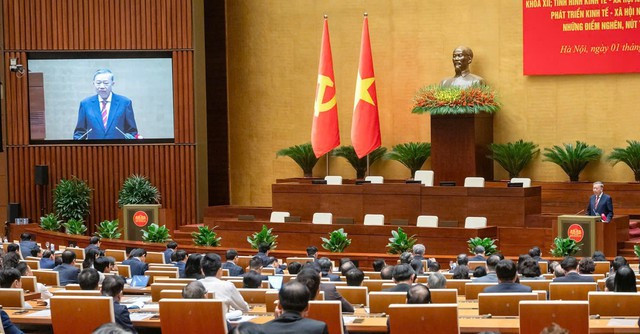
The revolution of streamlining the apparatus organization is not unprecedented in world history as well as in Vietnam. This is an important issue that is often raised at times when the country has important changes, requiring changes in the organization of the state apparatus. Streamlining the apparatus organization has a direct impact not only on the agencies and organizations of the political system, but also on the staff and civil servants of that apparatus, so there are often many different views and attitudes. This is also a “sensitive” event, so it is very easy to be influenced by distorted arguments and false information, even leading in a negative direction. Therefore, “in the first quarter of 2025, more than 48% of bad and toxic information on cyberspace is related to streamlining the apparatus organization”(1). Therefore, it is necessary to identify bad and toxic information, and form solutions to fight and refute the distorted arguments of hostile forces.
2. Content
2.1. Identifying the recent distorted arguments about the policy of streamlining the political system’s organizational apparatus
Recently, the arguments distorting the policy of streamlining the organizational apparatus of Vietnam’s political system have focused on the following main issues:
Firstly, the argument that the policy of streamlining the Party’s political apparatus is just the “subjective will” of the head of our Party. Recently, General Secretary To Lam has made many important speeches on streamlining the political apparatus, considering this an urgent matter that cannot be delayed. However, reactionary forces and political opportunists have distorted it, saying that this is the “subjective will” of the head of our Party, and is therefore “forced” and “imposed”(2).
Secondly, the slanderous argument that the policy of streamlining the apparatus is essentially just a “political trick”. Recently, some foreign media outlets with ill will towards Vietnam published an article: The essence of the so-called streamlining of the apparatus with extremely reactionary arguments. They distorted that streamlining the apparatus is essentially a “power game”, “political war”, “popular tricks” aimed at “gathering factions” to “purge internally”, and “eliminate opponents within the Party”(3). Thereby, hostile forces inferred that the current merging of ministries, departments, branches, and organizations from the central to local levels in Vietnam is no different from the Soviet Union’s political reform in 1985, which will inevitably lead to failures that “destroy the system”, causing “social disorder and instability”!
Thirdly, some political opportunists have claimed that the work of restructuring the apparatus is being carried out with a “lack of transparency”; that streamlining the apparatus “does not reduce the number of employees but only paves the way for corruption, bribery, and the elimination of talent”(4). They claim that Vietnam’s streamlining of the apparatus is only “mechanical” and “bureaucratic” in the style of “merger and division”, and in fact “merely transfers people from one place to another, causing wastefulness, complexity and disruption”; that it is streamlined but “bloated” or “refined but not compact”.
Not only do they distort and sabotage the policy of streamlining the apparatus of the political system in general, on many social networking sites, hostile and reactionary forces from abroad also distort the policy of streamlining the apparatus in the Army and the policy of implementing the organization of local military agencies when organizing the two-level local government apparatus. On the VOA Vietnamese blog on March 14, 2025, an article was published: “Does the Army welcome the abolition of district-level troops?” with the purpose of distorting and opposing the policy of dissolving the district-level military command and establishing the Regional Defense Command. The argument they put forward is that “abolishing the district-level troops will weaken national defense”, “causing the army lack flexibility and less combat-capable”(5).
As a matter of rule, whenever our Party introduces a policy or guideline, hostile forces always find ways to distort and sabotage it. The attacks against the policy of streamlining the organizational apparatus have appeared more frequently in recent times is due to several reasons. First of all, this is a major policy of the Party that affects all ministries, branches, localities, and has a significant impact on cadres and party members in agencies of the political system. Moreover, 2025 is a year of many important political event: The 95th anniversary of the founding of the Communist Party of Vietnam; the 50th anniversary of the liberation of the South and national reunification; the 80th anniversary of the founding of the Democratic Republic of Vietnam, now the Socialist Republic of Vietnam. Particularly, from now until the end of 2025 is the time to organize Party congresses at all levels towards the 14th National Party Congress, which will take place in early 2026. Therefore, the continuous use of distortions and denials by hostile, reactionary, and opportunistic political forces to deny the Party’s policy on streamlining the organizational apparatus is aimed at creating skepticism, confusion, and loss of confidence among cadres, party members, and people in the Party’s major policies.
For the Army, this is a very important time as grassroots Party committees are holding Congresses, leading up to the 12th Army Party Congress. Therefore, the distortions of hostile forces regarding the policy of reorganizing local military units according to the new administrative system, if not promptly countered, will affect the psychology and thinking of a segment of cadres, officers, and soldiers, and directly impact the success of the Party Congress. Hence, identifying the distortions, plots, and sabotage schemes of hostile forces against the Party’s policy of streamlining the organizational apparatus in general and in the Army in particular is an urgent task.
2.2. The revolution of streamlining the organizational apparatus in Vietnam is consistent with the general trend of the world, the realities of Vietnam as well as blending the Party’s will and the people’s heart
Firstly, the revolution of streamlining the organizational apparatus in Vietnam is not unprecedented, but is rather the creative application and development of V.I. Lenin’s views and Ho Chi Minh Thought
Immediately after the victory of the Russian October Revolution, V.I. Lenin paid special attention to improving the effectiveness and efficiency of the state apparatus. Affirming the urgency of this important task, V.I. Lenin emphasized: “Today, after we have defeated the bourgeoisie politically and consolidated that victory militarily, we must achieve victory in the field of national economic organization, production organization, and national inventory and control”(6); and also affirmed: “That reform must be given one of the highest priorities”(7).
According to Lenin, the reason to streamline the state apparatus was because: “Only by making our apparatus as clean as possible, only by reducing to the minimum everything that is not absolutely necessary, can we stand firm”(8). To reach that goal, Lenin outlined three principles: (1) “act only after careful consideration”(9); (2) “We’d rather get fewer, but better”(10); and (3) “We’d rather lose two or even three years than to rush and end up with no hope of training good personnel”(11). In other words, reforming the state apparatus must be carefully calculated, with a specific roadmap and steps; prioritizing organizational and managerial capacity over mere numbers; avoiding haste, but proceeding prudently at every stage.
Thoroughly understanding V.I. Lenin’s instructions, throughout the process of leading the revolution, Ho Chi Minh constantly paid due attention to and took care of building our state apparatus in a compact, low-level, clear-cut direction with clear functions, tasks, and effective operations. According to Ho Chi Minh: “Because our country is small, we do not need many ministries”(12), the core issue is to arrange the state apparatus in a truly scientific way, operating smoothly, effectively, and efficiently. He pointed out: “The organization must be neat. The tasks of each department and each person must be clearly defined”(13); “Government agencies and organizations, economic agencies and committees need to improve productivity and reduce the number of people”(14). The purpose of streamlining the apparatus is not only to improve productivity and work quality and avoid inconvenience to the people, but also to contribute to practicing thrift, fighting wastefulness throughout the entire political system and creating resources for national development.
Thus, from the viewpoint of V.I. Lenin to Ho Chi Minh’s thought, both affirm the importance and urgency of the task of streamlining the state apparatus. Practice has also proven that timely reforms turned the Soviet state apparatus from “very disappointing, if not outright bad” into “as clean as possible”, as Lenin affirmed; creating a turning point that enabled the Soviet Union to advance from an agrarian country into a major industrial power. For Vietnam, in the early days of independence, thanks to the organization of a compact state apparatus, operating effectively and efficiently, the country was able to overcome the “thousand-pound weight hanging-by-a-hair” situation, both maintaining the achievements of the revolution and protecting the young government, “both pursuing the resistance war and building the nation”.
Thus, the policy of streamlining the organizational apparatus was put forward by V.I. Lenin and Ho Chi Minh at revolutionary turning points. Therefore, our Party has creatively applied and developed those views and ideas at a time when Vietnam is undergoing revolutionary changes - having undergone nearly 40 years of national renovation to prepare for entering a new era of national development.
Secondly, the revolution to streamline Vietnam’s organizational apparatus is not a subjective will but is rather in line with the general trend of the world and comes from Vietnam’s urgent realities.
Globally, administrative reform and apparatus streamlining are major policies of many countries to build professional and modern administrations. Many countries, including developed countries in Asia such as Korea, Japan, China, and Singapore have recently taken strong measures in cutting down ministries and ministerial-level agencies. Singapore, for example, has implemented the “Smart Government” model, reduced the number of agencies and promoting the application of digital technology in management. In 2021, “Singapore’s public authorities significantly reduced administrative procedures and improved efficiency in serving the people. With a streamlined civil service of only 16 ministries, Singapore still ensures administrative efficiency”(15). Similarly in the US, “on February 16, 2025, the administration of US President Donald J. Trump cut more than 9,500 federal employees and continued to set a target of reducing the payroll by 75%”(16). Thus, streamlining the state apparatus is a policy of many countries, not unprecedented as the distorted arguments of hostile forces.
In Vietnam, the policy of streamlining the organizational apparatus is not unprecedented. On October 25, 2017, the 12th Party Central Committee issued Resolution No. 18-NQ/TW on continuing to renovate and reorganize the political system to be streamlined and operate effectively and efficiently. After 7 years of implementing Resolution No. 18-NQ/TW, our Party has assessed: “The organizational structure of the Party, State, Fatherland Front, and socio-political organizations from the central to local levels has been arranged synchronously and streamlined, reducing many central and provincial-level agencies and units and internal focal points; reducing intermediate levels; gradually improving the overall organizational model of the political system. The functions, tasks, powers, and organizational structure of agencies, units, and organizations have been reviewed, adjusted, and supplemented more clearly; strict management, a large number of leaders and managers, especially deputy leaders, have been reduced; the operational efficiency of agencies, units, and organizations has been initially improved. The pilot implementation of a number of new organizational models and concurrent leadership positions has further clarified the theory and practice of organizational structure”(17).
However, with the spirit of frankness, self-criticism and criticism, our Party also pointed out the limitations and shortcomings, including: The organizational structure of the political system is still cumbersome, with many levels and focal points; the effectiveness and efficiency of operations do not meet the requirements and tasks; the functions, tasks, powers, responsibilities, and working relationships of provincial and district Party Committees have not been fully specified, and there is a lack of regulations on the working regulations of Party Committees at all levels; the management and operational capacity and the effectiveness and efficiency of some state agencies at both the central and local levels are still limited; the organizational structure and methods of operation of the Fatherland Front and socio-political organizations are slow to be renovated, and some tasks are still overlapping, and so on.
In particular, in the context of Vietnam promoting the development of science and technology, innovation and digital transformation, a streamlined apparatus is needed to “rise up” and “take off”; a team of cadres with good expertise, solid skills, and innovative thinking is needed to quickly keep up with the trend of the times, master science and technology, and develop creative breakthroughs. This is an urgent requirement from Vietnam’s reality on the threshold of a new era of development.
Thirdly, the revolution to streamline the organizational apparatus in Vietnam is not a “formal” or “mechanical” one, but has been carried out synchronously and resolutely, bringing positive results and receiving the consensus and support of the people.
With the spirit of “running and lining up at the same time”, “The Central level does not wait for the provincial level, the provincial level does not wait for the district level, the district level does not wait for the grassroots level”, “The Central level sets an example, the locality responds”, since early 2025, agencies from the central to local levels have actively and creatively implemented the Party’s guideline. This has mobilized the entire political system, promoting the strength of the great national unity bloc in implementation.
As a result, many of the set goals met on time or ahead of schedule: “After more than 4 months, the organizational system and agencies of the Party, the State, the Fatherland Front, and socio-political organizations from the Central to local levels were arranged in a synchronous and streamlined manner; the activities of Party delegations and Party executive committees were ended, new Party committees were established at the Central and local levels, ensuring the comprehensive leadership, and direction of the Party with the State, the Fatherland Front, and socio-political organizations; reducing intermediate levels, reducing many agencies and units directly under the Central, provincial, district, and internal focal points; abolishing the general department level, and departments within divisions mostly discontinued...”(18). In particular, thoroughly grasping V.I. Lenin’s instructions: “In order for the People’s Committee apparatus to reach the desired level, it is necessary to firmly maintain the rule: act only after careful consideration”(19), the streamlining of the apparatus, although implemented decisively and urgently throughout the entire political system, is not hasty, or carless. Nor was it done just to get it done... On the contrary, our Party clearly defined the roadmap and specific steps following the spirit of “The Central Committee sets an example, and the localities respond”. The Party Central Committee has a unified viewpoint: “(i) To renovate, arrange, and streamline the organizational apparatus, to build a lean, compact, strong, effective, and efficient political system; to implement the principle of unified leadership of the Party. (ii) To ensure comprehensiveness, synchronization, and unity in the political system; to comply with the Constitution and laws. (iii) To harmoniously combine inheritance and stability with innovation and development; to have a long-term vision, to ensure long-term stability; to promote potential and advantages, to expand the development space of localities, to meet the goals and requirements of the socio-economic development strategy. (iv) To ensure unity in the political system and consensus among the people”(20).
In particular, to promote the people’s right to mastery in giving opinions and suggestions on the Party’s strategic decisions, many ministries, branches and localities have organized conferences, seminars and meetings with voters to collect opinions from experts, scientists and the masses on the plan to reorganize and streamline the apparatus at both the Central and local levels. This shows that the majority of cadres, party members, and people agree and support the Party’s major policy and place their trust and hope that the new organizational apparatus of the entire political system will create a new impetus and new momentum to bring Vietnam steadily into a new era of development. Therefore, it cannot be claimed that streamlining the apparatus is the “subjective will” or “forced imposition” of the leader of our Party, but rather a blending of the “Party’s will” and “people’s hearts”.
Fourthly, the revolution to streamline the organizational apparatus in the Army was also carried out swiftly and decisively, making the Army increasingly “refined, compact, strong, and modern”.
As a pioneering forces in thoroughly grasping and organizing the implementation of the policy of reorganizing the Central apparatus, under the absolute and direct leadership of the Party and the Central Military Commission, the Ministry of National Defense has closely, seriously, resolutely, synchronously and methodically led and directed the work of reorganizing the Army’s organizational system. Accordingly, “the entire army was reduced by 2 army corps, 1 general department, 3 general department-level entities and equivalent focal points, 37 department-level and equivalent focal points, and nearly 300 departments”(21). This is a great and solid step forward in the cause of building a lean, compact, and strong Vietnam People’s Army, capable of fulfilling the task of protecting the Fatherland in the new situation.
Regarding the policy of reorganizing the local military agencies according to new administrative units, this is a correct strategic decision, not a “temporary decision” or “a decline in national defense strength” as claimed by hostile forces. The implementation of this policy is a continuation of the correct military line that our Party has outlined for many years, and also a combination of theory and practice, long-term strategy and specific requirements in the current situation. The Vietnam People’s Army is not merely an organization, but the core force protecting the Party, the State, the socialist regime, and national independence and sovereignty. Therefore, the policy of reorganizing local military agencies is not only to save resources, but also to optimize the combat capability of the Army, helping units to be able to quickly mobilize and respond promptly to all complex and diverse situations in an rapidly changing world.
A modern army does not only rely on large numbers but on quality, leadership, command, and close coordination between military forces, along with modern science and technology. Therefore, the implementation of organizing local military agencies according to new administrative units is consistent with the general policy of streamlining the political system’s apparatus, while also being associated with the characteristics of the Army. This will contribute to increasing the strength of the Army to build and firmly protect the Socialist Republic of Vietnam on the threshold of a new era of development.
3. Conclusion
A new era of development is opening up for the Vietnamese nation. The Party’s recent strategic decisions, including streamlining the organizational apparatus, have created fundamental and comprehensive changes in the entire political system; creating new positions and forces for the country, unleashing all existing resources, and at the same time strengthening the confidence and increasing the will and strength of each cadre, party member, and the people. Recognizing and countering hostile distortions about the organizational reform revolution strengthens our confidence in the Party’s policy and leadership. With unity and resolve, we will overcome difficulties and challenges and firmly enter Vietnam’s new era of development - an era of prosperity, civilization, and happiness!
Received: June 20, 2025; Revised: July 2, 2025; Approved for publication: July 14, 2025.
Author’s email: nguyenquoctuan@gmail.com
Endnotes:
(1), (2), (4) Synthesized according to the Report of the Institute for Social Opinion Research, Central Propaganda and Mass Mobilization Commission on the situation of bad and toxic information on cyberspace, first quarter of 2025 (Internal newsletter), Hanoi, April 6, 2025.
(3), (5) Vo Van Hai: “RFI’s deceitful arguments again”, People’s Army Newspaper, March 6, 2025.
(6), (7) The immediate tasks of the Soviet government, Truth Publishing House, Hanoi, 1975, pp.11, 12.
(8), (9), (10), (11), (19) V.I. Lenin: Complete Works, vol.45, National Political Publishing House, Hanoi, 2006, pp. 459, 444, 445, 445, 444.
(12) Ho Chi Minh: Complete Works, vol.4, National Political Publishing House, Hanoi, 2011, p.146.
(13) Ho Chi Minh: Complete Works, vol.8, ibid., p. 132.
(14) Ho Chi Minh: Complete Works, vol.7, op. cit., p. 367.
(15) Trinh Van Tung: “Trends of administrative reform and state apparatus of some countries in the world and suggestions for Vietnam”, The Journal of Policy and Leadership, No. 3-2025, p.16.
(16) US economy faces the largest wave of job cuts in history, https://thoibaotaichinhvietnam.vn, February 25, 2025.
(17) Central Executive Committee: Conclusion No. 121-KL/TW on summarizing Resolution No. 18-NQ/TW on “Some issues on continuing to renovate and reorganize the apparatus of the political system to be streamlined and operate effectively and efficiently”, Hanoi, January 24, 2025.
(18), (20) Notice of the 11th Conference of the 13th Central Executive Committee, https://baochinhphu.vn, April 12, 2025.
(21) Tran Lam: “Imprints from the streamlining of the Army’s organizational apparatus”, People’s Army Newspaper, May 17, 2025.
Under supervisory of: Ho Chi Minh National Academy of Politics
Editor in Chief: Assoc. Prof., Dr. Nguyen Thang Loi