Gửi bình luận
Hủy
Gửi
Thur, 22/10/2026

DOI: https://doi.org/10.70786/PTJ.V44.8411
(PTOJ) - The Party School culture - the Ho Chi Minh National Academy of Politics is a solid foundation contributing to building a clean and strong Party organization, worthy of the trust of the Party and the people. This article analyzes the political and legal bases for building the Party School culture, and at the same time, gives a number of proposals to promote the Party School culture in the new era - the era of national progress.
MA. DO THI MY DUNG
MA. PHUNG THI HAI HAU
Political Theory Journal,
Ho Chi Minh National Academy of Politics
1. Introduction
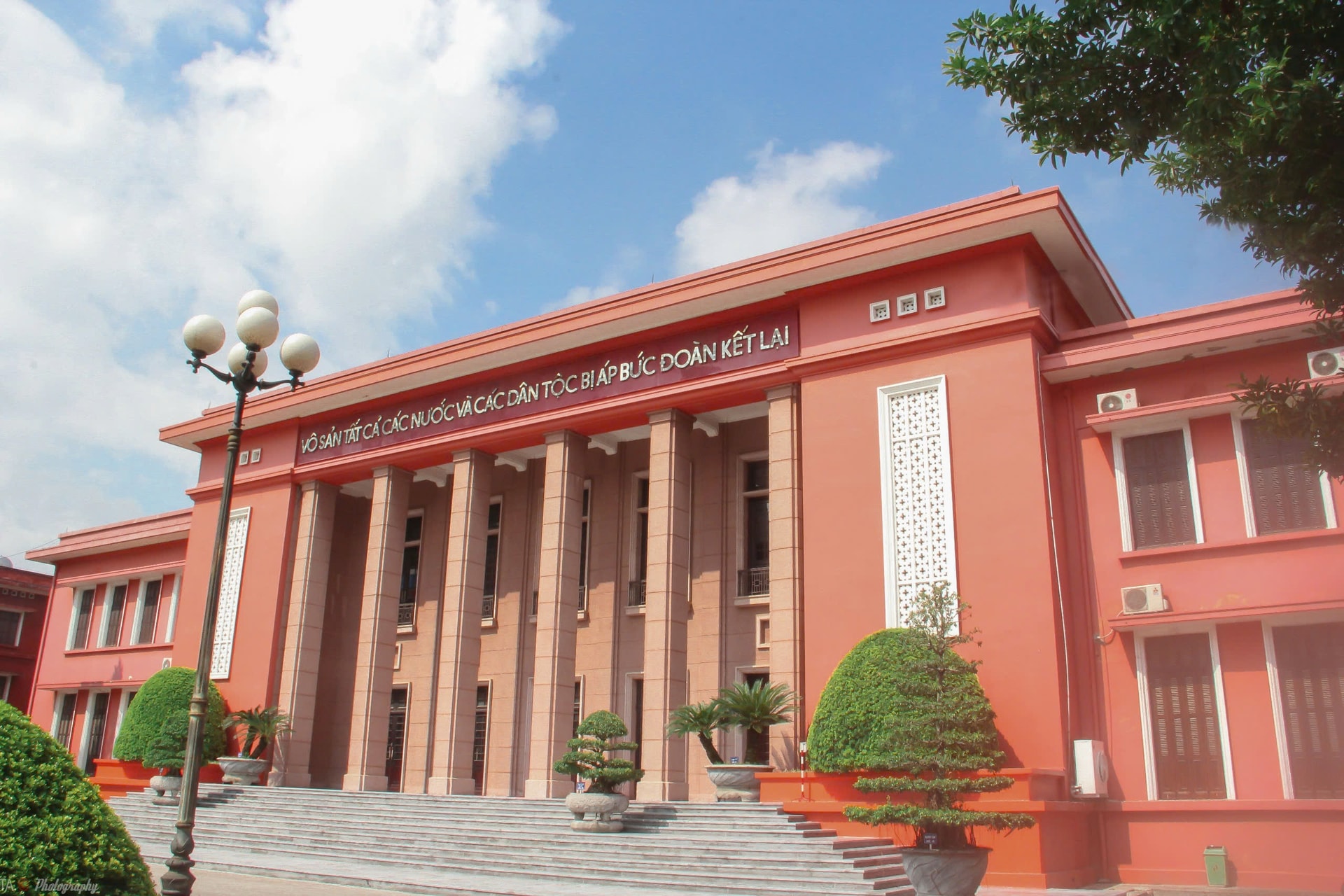
The Ho Chi Minh National Academy of Politics is a national center for training and fostering mid- and senior-level leaders, managers, and political theory scientists of the Party, the State, and socio-political organizations; a national center for scientific research on Marxism-Leninism and Ho Chi Minh Thought, research on the Party and State’s guidelines, policies, and laws; research on political science, leadership and management sciences to serve the teaching and learning process. It also contributes to providing scientific arguments in formulating guidelines and policies of the Party and the State(1).
The culture of the Party School - the Ho Chi Minh National Academy of Politics is formed from core values developed over the 75 years of construction and development. There are not only principles, values and standards, but also ethical qualities, a spirit of responsibility at work, communication and behavioral skills, and a culture of continuous learning.
The Party School culture has both the typical elements of socialist culture and the unique elements of the school - a place “to train advanced soldiers, striving for the cause of the proletariat”(2).
Just as the concept of culture has many different interpretations, the concept of Party School culture can be understood in many different ways. We agree with the viewpoint that “Party School culture is a system of values that reflects the level of scientific and revolutionary political theoretical thinking, based on Marxism-Leninism, Ho Chi Minh Thought, the cultural quintessence of the country and humanity, along with values of behavioral culture and external culture, playing a role in the work of educating and training key leaders and managers of the Party and the State at all levels and in all sectors, meeting the requirements of national development”(3).
Over the past 75 years of construction and development, each cadre and student of the Ho Chi Minh National Academy of Politics has always been proud to promote the cultural tradition of the Party School. Faced with changes around the world, especially in the new era - the era of the national progress, cadres and students of the Party School are increasingly aware of the pride and great responsibility of inheriting and promoting the Party School culture, creating momentum for the Ho Chi Minh National Academy of Politics to develop further and meet the requirements of the times.
2. Political and legal basis for building Party School culture
Deeply aware of the importance of building Party School culture and workplace culture, thereby contributing to the comprehensive development of cadres, civil servants, and public employees in terms of both quality and capacity to meet the requirements of the new period, in recent years, our Party and State have developed and issued many guidelines and policies to implement workplace culture within the Party School culture.
Inheriting and developing the Resolution of the 5th Central Committee, 8th Session, dated July 16, 1998, on building and developing an advanced Vietnamese culture imbued with national identity, the 9th Central Committee Conference, 11st Session, of the Party issued Resolution No. 33-NQ/TW dated June 9, 2014, on building and developing the Vietnamese culture and people to meet the requirements of sustainable national development. Resolution No. 33 clearly states: “Focus on building culture in the Party, in state agencies and organizations; consider this an important factor in building a clean and strong political system. In particular, focus on building a contingent of cadres, party members, civil servants, and public employees with ethical qualities, dedication, wholehearted service to the Fatherland, serving the people, closely linked to the people; having a sense of respecting the law; and having democracy coupled with discipline and order; personal freedom associated with social responsibility and civic duty”(4).
The 13th National Party Congress, orienting the development of culture and people for the 2021-2026 term, emphasized an important task: “Build and implement cultural standards in leadership and management. Focus on building a healthy, democratic, united, and humane workplace cultural environment; push back against bureaucracy, factionalism, disunity, opportunism, and pragmatism”(5). “Research, supplement, and perfect revolutionary ethical values in the spirit of the motto, “Our Party is ethical and civilized” to suit new conditions and the nation’s fine cultural traditions. Build ethical standards as a basis for cadres and party members to self-regulate their behavior in daily work”(6).
Speaking at the National Cultural Conference to implement the Resolution of the 13th National Party Congress on culture, General Secretary Nguyen Phu Trong requested to fulfill the tasks: “Focus on building the Party and the political system in terms of culture and ethics; resolutely fight against corruption and negativity so that our Party and the political system of our country are truly ethical, civilized, and representing the conscience and dignity of the Vietnamese people. Build a culture in leadership and management; promote the exemplary role of cadres and party members, especially strategic cadres and leaders, following President Ho Chi Minh’s thought, ethics, and cultural style”(7).
Based on the Party’s policies and viewpoints, recently the Government also issued many legal documents, specifically: Decision No. 129/2007/QD-TTg dated August 2, 2007 by the Prime Minister promulgating the Regulations on office culture at state administrative agencies; Decision No. 1847/QD-TTg dated December 27, 2018 by the Prime Minister on approving the Project on Public Service Culture; Decision No. 733/QD-TTg dated June 14, 2019, by the Prime Minister promulgating the Plan to implement the Emulation Movement “Cadres, civil servants and public employees emulate to implement workplace culture” for the period 2019 - 2025, aiming to improve public service ethics, sense of responsibility, and the working capacity to better connect with and serve the people.
With special attention to building Party culture throughout the Party School system, on May 19, 2021, the Central Party Secretariat issued Regulation No. 11-QD/TW on standard political schools, emphasizing the building of Party School culture criteria, discipline and order.
At the Ho Chi Minh National Academy of Politics, in order to promote the functions and tasks of the Party School and the role of the Party School culture in training and fostering cadres, the President of the Academy issued Decision No. 2616/QD-HVCTQG dated October 10, 2007, on implementing workplace culture at the Ho Chi Minh National Academy of Politics. The President of the Center of the Ho Chi Minh National Academy of Politics. The Public Administration signed Decision No. 1659/QD-HVCT-HCQG dated June 26, 2008, promulgating the Code of Conduct for cadres and civil servants of the Ho Chi Minh National Academy of Politics and Public Administration.
Following that, on October 26, 2017, the Director of the Ho Chi Minh National Academy of Politics signed Decision No. 5029-QD/HVCTQG issuing the Regulations on Cultural Conduct of the Ho Chi Minh National Academy of Politics and Political Schools of centrally governed provinces and cities. Decision No. 5029 specifies the subjects, scope, and principles of application for all cadres and learners working, studying, and researching at the Ho Chi Minh National Academy of Politics, Academy of Journalism and Communication, regional academies, and provincial and municipal political schools (collectively referred to as Party Schools).
The above legal foundations are important bases for building and promoting ethical cultural values, a clear and healthy lifestyle, and at the same time, building a standard of behavior for cadres and students at Party Schools, contributing to creating a democratic, professional, modern, scientific and humane working and learning environment that meets the requirements of international integration.
3. Promoting Party School culture in the era of national progress
The era of national progress is not only a period of economic development for the country but also a time when culture must truly become a great endogenous strength to affirm the nation’s position in the international arena. In the new era, culture is the combination of preserving fine traditional values, absorbing the cultural essence of the world, and being associated with innovation and creativity. In the new trend of the era, when the internet, digital technology, and social networks... penetrate every corner of life, the Party School culture also needs to transform in a timely and proper manner to create a Party School cultural identity that is both traditional and modern. To achieve that, attention should be paid to the following solutions:
Firstly, building the Party School culture in the new context must continue to adhere to Marxism-Leninism and Ho Chi Minh Thought. Industrial Revolution 4.0 has created great opportunities, but at the same time brought unprecedented challenges to social life, including cultural issues. In that trend, the Party School culture must be identified as the core to spread revolutionary, humanistic, and progressive values. Therefore, cadres and party members of the Party School must be pioneers in renovative thinking and must adhere to building a culture based on the foundation of Marxism-Leninism and Ho Chi Minh Thought so as not to lose the cultural identity and revolutionary ethics. This is a particularly important requirement for cadres, party members and students at the Party School.
Secondly, building the Party School culture must aim at making the Academy a truly leading national center for the country in training and fostering cadres of the Party, the State, the political system, and cadres researching political theory. The cadre contingent is the core force implementing the Party and State’s guidelines and policies. Therefore, the building and development of a professional learning environment, promoting school discipline, study discipline, political mettle, ethical qualities, a learning spirit, and a sense of responsibility contribute to fostering cadres that are both virtuous and talented. Culture in scientific research is expressed through the spirit of creativity, responsibility, and sense of contributing to the common development.
Thirdly, maintaining ethical culture in the context of being deeply affected by the internet and technological devices. The ethical culture of cadres and party members is a core factor in building the personality of party members. During Industrial Revolution 4.0, with the explosion of the internet, the ethical culture of cadres, party members and students of the Party School has been greatly affected, even changing due to the process of accessing network environments which contain many multidimensional factors. Therefore, party members of the Party School, in addition to always having to consciously practice and maintain political qualities and revolutionary ethics to be worthy of the trust of the Party and the people, must also regularly practice their ethics, and maintain virtue, solidarity, and creativity.
Fourthly, improve the behavioral and communication culture. The behavioral and communication culture of cadres, party members, and students of the Party School reflects, in part, the sense of responsibility and the spirit of serving the people of each individual. In the era of national progress, when the country is deeply integrating with the rest of the world, the role of cadres, party members, and students is emphasized more than ever. Accordingly, the behavioral and communication culture is the “bridge” that demonstrates the political mettle and personality of cadres and students of the Party School before the people.
The behavioral culture of cadres, party members, and students of the Party School is not only reflected in the way they treat others, but also in putting national and collective interests above all else. Virtues such as modesty, sincerity, and trustworthiness need to be maintained as core values. In communication among cadres, colleagues, and students, persuasion and listening skills are needed, especially when dealing with sensitive or complex issues. Listening and using constructive language to avoid misunderstandings at work are crucial; at the same time, one must be flexible and adaptable in a multicultural communication environment.
The behavioral and communication culture of cadres and party members of the Party School is not only about words or behavior but must also be demonstrated through specific actions. Each cadre and party member must strive to become a role model in life, contributing to spreading ethical values and personal responsibility. At work, act decisively, and transparently, and empathetically to achieve the highest efficiency. The smooth combination of the behavioral and communication culture of cadres and party members of the Party School is the “key” that helps each cadre and party member affirm their role in the development of the Academy.
Fifthly, emphasize the building of a learning culture in party organizations and a culture of self-learning for each individual. Building a learning culture in party organizations and party cells is always an important requirement when knowledge, renovation, and creativity become resources for development. For each party organization, building a learning culture not only contributes to improving professional qualifications but also ensures the steadfastness and creativity of the contingent of cadres and party members in the party organization and party cell. In the digital age, building a learning environment for cadres and party members does not stop at acquiring new knowledge, but is also a process of recreating old values to suit the new context. Therefore, party organizations and party cells need to promote critical thinking, create conditions to build lifelong learning skills for each cadre and party member, and at the same time build mechanisms and policies to encourage the spirit of learning among the contingent of cadres and party members of the Party School. In that process, the leadership and guidance role of key officials is a decisive factor in orienting new knowledge political, economic, and social trends in the country and abroad.
On the other hand, in a constantly changing world with knowledge, and technology evolving by the day and hour, if they do not take the initiative to learn, cadres and party members will easily fall into a state of backwardness, unable to meet the requirements of their work and the goals of the revolution. Therefore, self-discipline in learning is the foundation for sustainable development and is also a way to demonstrate loyalty to the Party, devotion to the people, and affirmation of a spirit of learning, a willingness to embrace new and good things to serve the community and society.
The era of national progress poses many challenges, especially the requirements for management capacity, strategic thinking, and the capacity to apply digital technology. Therefore, Party School cadres and Party members must continuously self-discipline in learning and training to adapt, improve their capacity, and apply digital tools to integrate new knowledge into practice and improve work efficiency.
Sixthly, continue to improve the working culture and the culture of responsibility. The working culture of cadres and party members of the Party School needs to reflect a high sense of responsibility, dedication to work, and always being ready to overcome all difficulties to complete the assigned tasks. Party School cadres and Party members are not merely executors of superiors’ directives but are also creative and proactive in their work, offering effective solutions to problems. This working culture is demonstrated through dedication to each task and the ability to manage, operate, and coordinate work among departments in the organization. This shows the important role of leaders and managers in promoting the working culture of their units, as they are people with strategic vision, the ability to forecast situations, and respond flexibly to all circumstances in the context of the new era.
Seventhly, protect and maintain the clean nature of the Party. Cadres and students of the Party School must always protect the values of the Party, resolutely fight against corruption and negativity, protect the clean nature of the Party organization; propagate and protect the Party’s ideological foundation; fight against the plots and tricks of hostile forces that aim to shake the people’s trust in the Party. This culture is demonstrated through not taking advantage of positions and powers for personal gain, as well as through taking responsibility for the violations of comrades and colleagues. In addition, it is necessary to be proactive in self-criticism and criticism, contributing to building a clean and strong Party, always ready to accept the inspection and supervision of the Party and the people and not having an arrogant or complacent attitude. Cadres and students of the Party School must always be aware that building the Party School culture is inseparable from the work of Party building. It is a key task that has important significance for the development of the country.
5. Conclusion
In the context of international integration and the era of national progress, culture is not simply a struggle between preservation and development, but a process of harmoniously combining the preservation and promotion of identity and the absorption of new values. Culture is an extremely valuable resource for a country to rise strongly and build a comprehensively developed society. With the development of science and technology and the trend of globalization, the Ho Chi Minh National Academy of Politics has clearly identified a suitable path for developing the Party School culture to both preserve identity and actively integrate with the world and spread the positive values of Party School culture to other Political Schools and training institutions across the country.
_________________
Received: December 25, 2024; Revised: December 27, 2024; Approved for publication: December 29, 2024.
l Endnotes:
(1) Decision No. 145-QD/TW dated August 8, 2018 of the Politburo on functions, tasks, powers and organizational structure of the Ho Chi Minh National Academy of Politics.
(2) Ho Chi Minh: Complete Works, vol.11, National Political Publishing House, Hanoi, 2001, p.95.
(3) See: Vu Thi Phuong Hau: “Building Party School culture according to Ho Chi Minh’s thought, morality and style in the new context”, https://www.lyluanchinhtri.vn, September 3, 2020.
(4) Resolution No. 33-NQ/TW dated June 9, 2014, of the 9th Conference of the Party Central Committee (11th tenure) on building and developing Vietnamese culture and people to meet the requirements of sustainable national development.
(5), (6) CPV: Documents of the 13th National Party Congress, vol.I, National Political Publishing House, Hanoi, 2021, pp.144, 146.
(7) Speech by General Secretary Nguyen Phu Trong at the National Cultural Conference to implement the Resolution of the 13th National Party Congress on the cultural field on November 24, 2021.

Under supervisory of: Ho Chi Minh National Academy of Politics
Editor in Chief: Assoc. Prof., Dr. Nguyen Thang Loi