
Gửi bình luận
Hủy
Gửi
Tue, 20/10/2026

Abstract: In respect to international relations, foreign policy, and diplomacy, President Ho Chi Minh left a valuable legacy, including a diplomatic ideology, diplomatic style, and unique and effective diplomatic practices, which fully embody the nature of the revolutionary diplomacy of the proletariat, deeply imbued with national identity, and absorbing the quintessence of international relations from countries all over the world. All of these blended into Ho Chi Minh’s school of diplomacy, opening the way for the Vietnamese diplomacy in the Ho Chi Minh era, which the entire Party and people have inherited and developed in ways that still retain lasting value.
Assoc. Prof., Dr. NGUYEN VIET THAO
Ho Chi Minh National Academy of Politics
1. Introduction
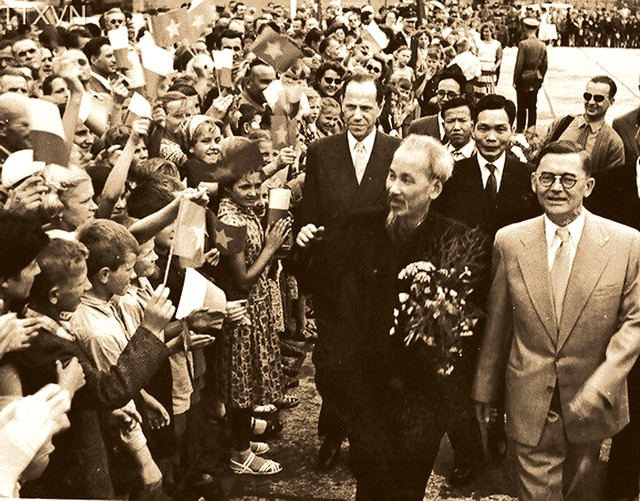
President Ho Chi Minh (1890-1969) - Hero of Vietnamese national liberation and world cultural figure; great teacher of the Vietnamese revolution; founder, organizer, and trainer of the Party and the State of Vietnam; outstanding soldier of the international communist movement; and great friend of the peoples of all nations of the world. From the start of the 20th century, by finding the right path for the nation’s revolutionary struggle, the path of national independence and socialism, he opened the Ho Chi Minh era, thus ending the history of feudalism and colonialism; linking the Vietnamese revolution with the world revolution, the nation with the international community; bringing Vietnam into the era of independence, freedom, and building socialism. At the same time, he also created Ho Chi Minh’s school of diplomacy, which bears a unique and effective mark.
A “school” is the content and practice of academic, political, economic, cultural, and social activities... of a contingent of like-minded people and methodologies guided, modeled, organized, and trained by a leader. In many cases, a school is associated with particular ideology and ideologies; with historical trends and tendencies; with educational and training institutions, and so on.
Ho Chi Minh’s school of diplomacy has a solid theoretical foundation and a rich practical foundation that has been tested, in practice creating characteristics and features such as: being friendly and making friends with all countries; independence, autonomy, solidarity, international cooperation; combining national strength with the strength of the times; sincerity, affection, loyalty, “helping friends is helping ourselves”, respecting ethics in foreign relations; “unchanging principles to respond to myriad changes””... Ho Chi Minh’s diplomatic school creates a powerful strength of the times, in combination with great national strength to ensure victory for the cause of building and defending the Fatherland.
Today, the renovation process is a continuation of the journey of the Ho Chi Minh era and of the Ho Chi Minh’s school of diplomacy for a rich people, a strong, democratic, equitable country, and civilized society, so that Vietnam can “stay on par with the world powers” as per his noble aspiration.
2. Content
2.1. Diplomacy for peace, independence, autonomy, comprehensiveness, and modernity
As an exemplary communist soldier, Ho Chi Minh was always consistent in his perception and actions: the socialist revolution is peaceful in nature. However, this is not a false, fragile peace, but a genuine, solid peace, based on national independence, national sovereignty, justice, and human dignity.
During the early years of the Democratic Republic of Vietnam, President Ho Chi Minh took advantage of the smallest opportunities to protect peace, even if it meant making concessions and compromises with the enemy. When there was no other possibilities, President Ho Chi Minh called for a national resistance, sacrificing everything, determined not to lose the country, and determined not to be enslaved.
Toward the US government, Ho Chi Minh clearly expressed his peaceful stance: “We are not attacking the United States. We have not committed any hostile action against your territory... While acts of war are still taking place, do not expect us to come to the negotiating table. Doing so would not be negotiating a solution but begging for peace, surrendering. That is something we will never do”(1). Until the last days of his life, despite being seriously ill, in a letter to US President R. Nixon on August 25, 1969, President Ho Chi Minh affirmed: “The Vietnamese people are very eager for peace, but true peace cannot be separated from true independence. Because the US imperialists invaded Vietnam, the Vietnamese people must fight to protect independence and maintain peace”(2). He also expressed: “I would be very happy to welcome the US President here peacefully. We extend a hand of friendship to any country that recognizes Vietnam as a free and independent country”(3).
Independence and autonomy were the prominent and consistent thoughts of the statesman Ho Chi Minh. Independence means not being dependent, imitative, or being dogmatic. Autonomy means being proactive, deciding one’s own actions, being responsible to the people, and knowing how to master oneself and one’s work.
In international relations and foreign affairs, Ho Chi Minh affirmed: “Independence without having one’s own army, one’s own diplomacy, one’s own economy. The Vietnamese people absolutely do not care for such false unity and independence”(4). Regarding the relationship between parties in the international communist and workers’ movement, he affirmed: “Parties, whether large or small, are independent and equal, and at the same time united and unanimous in helping each other”(5). “The Soviet Union and China are trying their best to help us selflessly and generously, so that we may have more conditions for self-reliance”(6). He also repeatedly advised: “A nation that is not self-reliant but waits for help from other nations does not deserve independence”(7).
2.2. Diplomacy of solidarity, friendship, cooperation, and deep international integration
Ho Chi Minh matured within the international communist movement; he was a leader of the proletarian revolution, and the great leader of the Party, and the Vietnamese people. However, he never passively copied the theories or practices of the international communist movement into Vietnam’s domestic and foreign lines; he always applied them appropriately and thereby contributed to supplementing and developing communist theory. Ho Chi Minh’s diplomatic thought surpasses the rigid class struggle model of many communists in the 20th century, forming a modern diplomacy of solidarity, friendship, cooperation, and deep international integration amid the fierce confrontation between the two systems of socialism and capitalism, between East and West.
Leader Ho Chi Minh sent messages to the French Government, the Allied countries and the United Nations, affirming that the new Vietnam was ready to cooperate with other countries in national reconstruction and building a better world: “Any country (including France) that honestly wants to bring capital to do business in Vietnam, with the aim of benefiting both sides, will be welcomed by Vietnam”(8).
Right from the country’s founding, President Ho Chi Minh declared that the Democratic Republic of Vietnam was ready to “be friends with all democratic countries and not make enemies with anyone”(9), expressed consistently and concretely:
1- With regard to Laos and Cambodia, Vietnam respects their independence and expresses its desire to cooperate on the basis of absolute equality between sovereign countries.
2- For democratic countries, Vietnam is ready to implement an open-door and cooperative policy in all fields:
a) Vietnam provides favorable reception for investment from foreign capitalists and technicians in all its industrial sectors.
b) Vietnam is ready to expand its ports, airports, and roads for international trade and transit.
c) Vietnam accepts participation in all international economic cooperation organizations under the leadership of the United Nations.
d) Vietnam is ready to sign special security agreements with naval and army forces within the framework of the United Nations(10), and so on.
Ho Chi Minh condemned the aggressive invaders in many countries for violating the Atlantic Charter and the San Francisco Charter, while expressing his desire to establish a global partnership for peace and common prosperity. On January 14, 1946, President Ho Chi Minh sent a telegram to the President of the United Nations General Assembly and representatives of several countries at the General Assembly, affirming Vietnam’s responsibility and important, useful contributions to “quickly and peacefully resolve the current problems in Southeast Asia”(11); “we cooperate with other countries in building a better world and a lasting peace”(12). In December 1946, Ho Chi Minh stated in his Appeal to the United Nations: “For democratic countries, Vietnam is ready to implement an open-door policy and cooperation in all fields”(13).
In the Declaration of the Government of the Democratic Republic of Vietnam to the Governments of countries around the world, on January 14, 1950, President Ho Chi Minh affirmed: “The Government of the Democratic Republic of Vietnam is ready to establish diplomatic relations with any government that respects the equality, territorial sovereignty and national sovereignty of Vietnam, in order to jointly protect peace and build world democracy”(14).
2.3. Revolutionary diplomacy with genuine internationalism
The proletariat differs from all other classes in human history in that it can only liberate itself by simultaneously liberating all of society. The proletarian revolution only succeeds when the proletariat of the entire world knows how to unite, form alliances, fight, and defeat the global bourgeoisie. When building the doctrine for the liberation of the proletariat, the classics K. Marx and F. Engels established the slogan: “Proletarians of the world, unite!”. In the new conditions of the early 20th century, leader V.I. Lenin supplemented this strategic slogan into: “Proletarians of the world and oppressed peoples, unite!”. The flag of proletarian internationalism raised by the classics was inherited, applied, and developed vividly by the revolutionary leaders of the world. A specific example is the case of Nguyen Ai Quoc - Ho Chi Minh.
Nguyen Ai Quoc - Ho Chi Minh made great contributions to the world from the start of the 20th century in understanding and practically solving the colonial problem. He did not simplistically view the colonial question merely as a peasant issue; nor did he mechanically conceive of the colonial question entirely as a matter of class and class struggle. The essence of the colonial problem is the problem of the colonial people, the struggle to eliminate the domination of colonialism, the national liberation revolution. Nguyen Ai Quoc was the first person to discover that colonialism is like a leech with two tentacles, one attached to colonial exploitation, the other attached to labor exploitation in the mother country; to destroy this monster, both tentacles must be cut off, and the tentacle in the colony can be cut off first. The colonial liberation revolution can break out first and must precede the proletarian revolution in the mother country; it is an organic part of the world revolution. This is the unique content of Ho Chi Minh’s proletarian internationalism.
During 30 years of traveling across five continents, working, studying and participating in revolutionary activities, Ho Chi Minh deeply understood the general picture of the world in the era of imperialism: “Despite the difference in skin color, in this world there are only two races: the exploiters and the exploited. And there is only one true friendship: proletarian friendship”(15). On that basis, he outlined the rule: “the fate of the world proletariat and especially the fate of the proletariat in the countries that invade the colonies is closely linked to the fate of the oppressed class in the colonies”(16).
Assigned by the Communist International to preside over the establishment of a communist party in Vietnam, leader Nguyen Ai Quoc directly drafted the Party’s Brief Platform and Brief Strategy, which clearly stated: “`we must jointly propagate and practice contact with oppressed peoples and the world’s proletariat, especially the French proletariat”(17).
A distinctive feature of Ho Chi Minh’s proletarian internationalism is the correct understanding of nationalism and the relationship between the class issue and the national issue in the proletarian revolutionary cause. In Europe and the developed countries of the West, national forces have ceased to play an active role, and the bourgeois governments have turned nationalism into bourgeois nationalism, propagating the superiority of one nation over another, spreading ethnic and racial hatred. In the East, where class differences have not yet reached their peak, the situation is completely different. Many national forces are still full of positive potential that the revolution must seize and organize into a team to fight against feudalism, colonialism, and imperialism.
Leader Ho Chi Minh and the Vietnamese revolution not only enjoyed the precious assistance of proletarian friendship but also witnessed the painful discord between the brother communist parties. In that context, he worked hard to educate cadres and party members that the relationship between communist and workers’ parties as well as between democratic and progressive organizations in the world based on the foundation of proletarian internationalism was inevitable in the context of imperialist capitalism becoming an international force; the principle of maintaining independence and autonomy in the spirit of true internationalism; a deep understanding that “helping the people of other countries means helping ourselves”; ensuring the principle of “respecting sovereignty, respecting customs and practices, and loving the people of other countries”.
Ho Chi Minh always emphasized the motto of “reason” and “affection” in international relations between communist and workers’ parties. “Reason” is, first of all, to comply with the basic principles of Marxism - Leninism, stemming from the common interests of the world revolution. “Feeling” is the sympathy and respect for each other in spirit and sentiment of those who share the same ideals and goals of struggle, overcoming the ideology of big countries and big parties. “Reason” and “affection” are vivid manifestations of Ho Chi Minh’s humanism and communist humanism.
2.4. Diplomacy “unchanging principles to respond to myriad change”
On May 31, 1946, before leaving for France to attend the Fontainebleau conference, President Ho Chi Minh confidently entrusted the role of Acting President to Mr. Huynh Thuc Khang: “Because of the national mission assigned to me, I have to go away for a while. At home, I rely on you and your colleagues to solve all difficulties. I hope you will “take the unchanging to respond to myriad changes”(18). From then on, “unchanging principles to respond to myriad changes” became the golden principle of Vietnamese diplomacy. “Unchanging principles to respond to myriad changes” means taking what cannot change (unchanging) to respond to countless changes (the myriad).
The “unchangeable” goal of Vietnam was clearly stated by President Ho Chi Minh: “I have only one desire, the utmost desire, which is to make our country independent, our people completely free, everyone has food to eat, clothes to wear, everyone can be educated”(19); that is national independence and socialism; national sovereignty, national unity, territorial integrity. Everything else is “ever-changing”, flexible, adaptable, and so on.
Vietnam is a small country, and for a long time was an underdeveloped country. On the other hand, it often had to confront the most powerful invading forces in the world. Such a unique position and circumstances require Vietnamese leaders to be both steadfast in strategic goals and flexible in tactics, appropriate to each case, context, partner, and objective. President Ho Chi Minh was an exemplary model who established the “unchanging principles to respond to myriad changes” for Vietnamese diplomacy in the era bearing his name.
In the “critical” situation of 1945-1946, President Ho Chi Minh demonstrated his diplomatic genius: temporarily making concessions and compromises with France, not allowing the British army to disarm the Japanese militarists, and chasing 200,000 of Chiang Kai-shek’s troops back into their country by signing the Preliminary Agreement with France on March 6, 1946, and the Provisional Agreement on September 14, 1946.
The Preliminary Agreement recognized the Democratic Republic of Vietnam as a free state within the Indochinese Federation and the French Union, with its own government, parliament, army, and finances; and agreed to hold a referendum in Cochinchina on reunification with the Democratic Republic of Vietnam. In return, our Government agreed to allow 15,000 French troops into the North to replace 200,000 Chinese Nationalist troops to disarm the Japanese. These troops had to all withdraw from Vietnam within 5 years. Both sides would cease fire, maintain current troop positions, and negotiate the future status of Indochina, the diplomatic relations between the Democratic Republic of Vietnam and foreign countries, and the economic and cultural interests of France in Vietnam, and so on.
After the deadlock of the Fontainebleau Conference, President Ho Chi Minh, on behalf of the Government of the Democratic Republic of Vietnam, signed with the French Overseas Minister Marius Moutet the Vietnam-France Provisional Agreement, affirming that both sides would respect the spirit and some provisions of the 6-3 Preliminary Agreement, especially those related to Vietnam’s independent status in the French Union, and commit to freedom and democracy in the South. The two sides would suspend all acts of conflict and force in the South from October 30, 1946, respect democratic freedoms, and would decide on the format for a referendum in the South. France would release arrested Vietnamese patriots; Vietnam would return confiscated French properties, respect the property and economic establishments of the French and allow them to enjoy the same freedoms as Vietnamese citizens, including the right of freedom of business, and would give priority to the use of French advisors and experts; Vietnam would allow French educational and scientific institutions to operate freely, return the Pasteur Institute in Hanoi to France; Vietnam agreed to consider the Indochinese piastre as the sole currency for all of Indochina and agreed to establish a customs union with other members of the Indochinese Federation, and so on.
The September 14th Provisional Agreement offered the highest economic and trade concessions that the Vietnamese Government could offer to France. If the Preliminary Agreement helped us divide the enemy ranks, eliminate enemies, and avoid dealing with multiple enemies at the same time, then the Provisional Agreement clearly embodied the delaying strategy, creating conditions to continue consolidating the young revolutionary government, and prepare forces for the inevitable long-term resistance war. The September 14th Provisional Agreement also expressed goodwill to salvage the truce, avoid a complete breakdown in relations between the two countries, and maintain the ability to continue peaceful negotiations on a bilateral solution later.
The diplomatic style of “unchanging principles to respond to myriad changes” continued to shine in later stages of the Vietnamese revolution under the wise leadership of President Ho Chi Minh, contributing to the art of winning step by step, moving towards complete victory, “fighting while negotiating” to make the “Americans leave” first and then defeat the “puppet”... More importantly, it was this unique diplomatic style that guaranteed the Vietnamese revolution great strength of the era even at times of serious disagreements among key communist forces. The whole world, from the left to the right, from communists to progressive peoples, from the Western center of capitalism to the vast periphery of Asia, Africa, Latin America... formed a united front to support Vietnam in the wars against colonialism and imperialism. This unprecedented event in 20th-century world politics demonstrated the timeless value of Vietnamese diplomacy in the Ho Chi Minh era.
In the process of national renovation, the Party and the State have inherited, applied and creatively developed Ho Chi Minh’s school of diplomacy, raising it to a new height; implemented a diplomatic policy of peace, independence, self-reliance, cooperation and development, diversified and multilateralized foreign relations with the spirit of Vietnam being a friend, a reliable partner and a proactive and responsible member of the international community. Vietnamese diplomacy has taken the lead in the mission of creating a peaceful and stable international environment; firmly protecting independence, sovereignty, and territorial integrity; building a system of open and in-depth international relations; attracting many important and indispensable resources for the country’s development and enhancing the position and prestige of the nation in the international arena. That is revolutionary diplomacy in today’s world, both firmly maintaining the goals and nature of socialism; in line with the major trends of the contemporary world as well as the specific conditions of the country and imbued with the identity of Ho Chi Minh’s school of diplomacy in the new era.
3. Conclusion
Foreign affairs are a continuation of domestic affairs, through different content and methods. The cause of national liberation and the construction of socialism in Vietnam was carried out under the conditions of an underdeveloped feudal-colonial, Eastern country , and in a context of the era far different from the premonition of the classics K. Marx, F. Engels, and also different from the situation of V.I. Lenin’s Soviet Russia in the early 20th century. Therefore, history set for leader Ho Chi Minh the mission of opening a suitable diplomacy to bring positive international factors and favourable conditions for the revolution in the country. The genius leader promptly and effectively responded to that demand with a unique Vietnamese diplomatic school in the era of national independence and socialism, which our Party, State, and people identified as Ho Chi Minh’s school of diplomacy - the Vietnamese diplomatic school in the Ho Chi Minh era. The school of diplomacy bearing his name pioneered the connection of the nation with the era; Vietnam with the world; and the world with Vietnam in the former struggle for national liberation and in today’s renewal and international integration. The priceless legacy bearing the name Ho Chi Minh has become a shared value for the genuine diplomacy of nations today in the cause of building a world of peace, independence, democracy, cooperation, and development.
Received: July 23, 2025; Revised: August 10, 2025; Approved for publication: August 28, 2025.
Author’s email: viettthaodcs@gmail.com
Endnotes:
(1), (3) Ho Chi Minh: Biographical Chronicle, vol.10, National Political Publishing House, Hanoi, 2016, pp.11, 12.
(2), (19) Ho Chi Minh: Complete Works, vol.15, National Political Publishing House Truth, Hanoi, 2011, pp.3, 627.
(4), (9) Ho Chi Minh: Complete Works, vol.5, op. cit., pp.602, 256.
(5) Ho Chi Minh: Complete Works, vol.12, op. cit., p.372.
(6) Ho Chi Minh: Complete Works, vol.10, op. cit., p.103.
(7) Ho Chi Minh: Complete Works, vol.7, op. cit., p.445.
(8) Ho Chi Minh: Complete Works, vol.6, op. cit., p.145.
(10), (11), (12), (13) Ho Chi Minh: Complete Works, vol.4, ibid., pp.523, 180, 210, 523.
(14) Ho Chi Minh: Complete Works, vol.6, op. cit., p.311.
(15), (16) Ho Chi Minh: Complete Works, vol.1, op. cit., pp.287, 295.
(17) Ho Chi Minh: Complete Works, vol.3, op. cit., p.3.
(18) Uncle Ho with Mr. Huynh Thuc Khang, https://baotanghochiminh.vn, February 12, 2019.
Under supervisory of: Ho Chi Minh National Academy of Politics
Editor in Chief: Assoc. Prof., Dr. Nguyen Thang Loi