

Vietnam proactively implements diplomacy with a spirit of self-reliance and courage in the face of the US's reciprocal tariff policy
DOI: https://doi.org/10.70786/PTOJ.2026.5195
Abstract: On April 2, 2025, as soon as US President Donald J. Trump announced his new tariff policy, Vietnam took subtle, proactive, courageous, confident, clever, and strategic diplomatic steps. This article analyzes Vietnam's steps in resolving trade disputes with the US through diplomatic activities and multilateralizing relations to deal with the US's reciprocal tariff policy.
Assoc.Prof., Dr. THAI VAN LONG
Institute of International Relations,
Ho Chi Minh National Academy of Politics
1. Introduction
On April 2, 2025, at the White House, US President Donald J. Trump announced a series of new tax policies to “regain economic sovereignty” for the US. Accordingly, the US imposed a basic import tax of 10% on all imported goods and from April 9, 2025, impose higher “reciprocal taxes” on 180 countries and territories that the US labeled as “causing trade imbalances”, in which Vietnam will be subject to a tax rate as high as 46%(1). The purpose of this is not to pursue trade balance, but as a tool to create an “upper hand” for the US and force other countries to sit at the negotiating table.
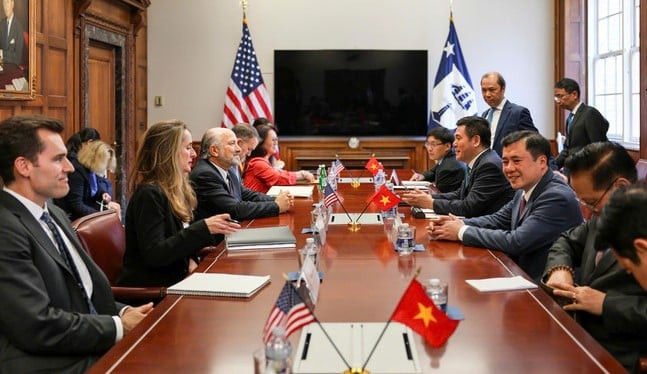
While many countries are confused, reacting incoherently or taking tough, individual actions to deal with the US tax policy, Vietnam has taken proactive, courageous and strategic diplomatic steps to deal with the tariff pressure from the US, protecting national interests, while at the same time enhance its position in the international arena.
2. Content
2.1. Vietnam resolves trade disputes with the US through proactive dialogue and negotiation
On the evening of April 4, 2025, General Secretary To Lam had a phone call with US President Donald J. Trump about Vietnam-US relations. Regarding bilateral trade relations, General Secretary To Lam affirmed: “Vietnam is ready to discuss with the US side to reduce import tax to 0% for goods imported from the US, and at the same time proposes that the US apply the same tax rate on goods imported from Vietnam, continue to import more goods from the US that Vietnam needs, and encourage as well as create favorable conditions for companies from the US to further increase investment in Vietnam.”(2) The phone call was assessed by both sides as having achieved positive results and reflecting Vietnam’s prompt, wise, and strategic diplomatic moves, specifically:
Firstly, Vietnam chose a dialogue approach to reduce immediate tensions, calling on the US side to remain calm and create conditions for both sides to have more time to negotiate and find a mutually beneficial solution before the new tax rate officially takes effect.
Secondly, Vietnam’s proposal to reduce import tax to 0% is not an immediate reaction or a unilateral act of compromise, but a strategic calculation made with careful consideration and preparation.
Thirdly, the phone call demonstrated the flexibility, proactiveness, and steadfastness of Vietnamese diplomacy. Flexible diplomacy chooses a flexible approach to solving problems, avoiding unnecessary “collisions”; proactively chooses the time for phone calls, makes conditional concession proposals, proactively leads, and contributes to reshaping the global trade order; steadfastly expands development space, and gradually enhances the country’s position in the course of international integration.
From a broader approach and analysis, it can be seen that the phone call between General Secretary To Lam and US President Donald J. Trump represents the pinnacle of a comprehensive, modern diplomacy that coordinates synchronously across all channels and fields to create a foundation for economic stability; flexible diplomacy and personalization of high-level leadership relations. This is a flexible, proactive, and confident diplomatic move, taking advantage of the economy to pave the way for diplomacy, turning commercial goodwill into a bridge to elevate bilateral political relations. During the phone call, General Secretary To Lam respectfully invited President Donald J. Trump and his spouse to revisit Vietnam soon. This is not simply a diplomatic act, but a move to establish a direct diplomatic channel at the head-of-state level, where the two sides can have open and frank dialogue on core issues from trade, Indo-Pacific strategy, to regional security and long-term bilateral agreements in the future.
It can be seen that when politics, economics, and personalization are integrated into diplomatic activities in a harmonious manner, Vietnam is not only a player in the volatile global diplomatic context but also proactively reshaping the rules of the game, building new standards of conduct for a rising country. By not choosing to stay silent to avoid confrontation or react emotionally to the US tax policy, Vietnam demonstrates a flexible and especially sensitive mindset, choosing the right time to make necessary and effective diplomatic moves.
2.2. Vietnam multilateralizes relations to create balance and avoid dependence.
In a volatile global picture, choosing the right partner at a crucial moment is decisive not only for success in a negotiation but also for shaping the national position in a new historical period. From that awareness, in facing the US’s reciprocal tax policy, Vietnam chose to approach the issue systematically, building a strategic multilateral cooperation network to create a new negotiating position instead of offering direct solutions. Vietnam cleverly strengthened its counterbalance by expanding and deepening its relations with leading powers such as Russia and China.
First of all, immediately after the US tariff announcement (April 2, 2025), Deputy Prime Minister and Minister of Foreign Affairs Bui Thanh Son paid an official visit to the Russian Federation from April 2 to 4. The visit aimed to promote the traditional friendship and comprehensive strategic partnership between Vietnam and Russia in the context of the new situation. The results of the visit helped: “strengthen, expand and deepen cooperation in various fields such as energy, especially green energy, renewable energy, transport infrastructure, logistics, science and technology, agriculture, biomedicine, culture, tourism, education and training; further promote the role of the Vietnam - Eurasian Economic Union Free Trade Agreement, focus on implementing key projects and developing new projects to soon make economic - trade and investment cooperation a pillar in Vietnam - Russia cooperation”(3).
When the US chose to impose tariffs of a coercive nature, Vietnam did not rush to react or call for retaliation, but instead took a calm diplomatic approach, choosing not argue with words but with practical actions to demonstrate its goodwill. On the one hand, Vietnam negotiated with the US to maintain dialogue, on the other hand, proactively signed a series of long-term cooperation agreements with Russia to strengthen its internal capacity. This is not only a courageous diplomatic move but also demonstrates the stature of a country that clearly understands its position in a volatile world, knows what it needs to do to survive and develop in the long run. Vietnam’s proactively strengthening its relationship with Russia at this time creates a soft balance in its diplomatic strategy with leading powers to increase the weight of negotiations to resolve hot international issues.
In the current context, Russia is not simply a friend but a Comprehensive Strategic Partner, accompanying Vietnam in building the foundation for an independent, self-reliant, and sustainable economy. This enhanced cooperation not only helps Vietnam overcome immediate challenges such as tariff barriers but also contributes to shaping Vietnam’s role and position in the future, at a time when oil, gas, nuclear energy, and high technology are gradually becoming soft weapons in the fight for global influence in the 21st century. In addition, Russia also plays the role of an intermediary power leading the Eurasian Economic Union (EA-EU), with which Vietnam signed a free trade agreement in 2015 and has so far recorded positive cooperation results. While Western countries, especially the United States, frequently use tariffs and economic sanctions as a means of diplomatic pressure, the Eurasian Economic Union operates on the principles of respecting sovereignty, non-interference in internal affairs, and ensuring bilateral interests. This provides a favorable environment for Vietnam to diversify its import-export markets, seek alternative sources of supply, and expand its economic space, especially in the context of the world moving towards a new multipolar order.
Vietnam strengthened cooperation with Russia to build a foundation for Vietnam to not only stand firm against the current economic “storms” but also be able to face possible strategic earthquakes in the future. More importantly, this is a strong affirmation that Vietnam will never accept the role of a “pawn” on the chessboard of power of the great powers. Vietnam has been, is, and will continue to be a resilient player with vision, strategy, and reliable partners like the Russian Federation to jointly build a self-reliant, prosperous, and happy future.
Next, from April 14 to 15, 2025, General Secretary of the Communist Party of China, President of the People’s Republic of China Xi Jinping paid a state visit to Vietnam. Vietnam welcomed the high-ranking Chinese delegation with respect and thoughtfulness, showing friendship, sincerity, and high regard for bilateral relations and for General Secretary and President of China Xi Jinping himself. However, Mr. Xi’s trip took place nearly two weeks after the US imposed a 46% tariff on Vietnamese goods, while China was facing high tariffs of up to 145%, in a global tax hike. Although Mr. Xi’s visit had been planned for a long time and was not directly related to the US tariff imposition, the timing made things more complicated. Clearly, Vietnam is facing a very sensitive diplomatic situation, how to maintain peace with China - a big neighbor while maintaining stable relations with the US - a leading economic partner. This was a moment when Vietnam needed its greatest resilience, as balancing between two economic superpowers was not only a diplomatic challenge but also a measure of national stature.
Notably, just a few hours after the meeting between Chinese President Xi Jinping and General Secretary To Lam, Mr. Trump declared at the White House: “I don’t blame China, I don’t blame Vietnam, I see that they had a meeting today… it was a happy meeting. But they met as if they were discussing “How to make America collapse”(4). This shows that while Vietnam always tries to balance its relations with strategic partners and seek independent space in the context of the chaotic trade war, it is Mr. Trump’s above attitude that forced us to choose a diverse range of partners to avoid dependence on a single superpower.
Vietnam can be flexible and patient when necessary, but always stands firm on its own feet, never allowing its dignity to be compromised. Therefore, while the U.S. continued to threaten tariffs, Vietnam still proactively and flexibly maintained negotiations with the U.S. Welcoming the Chinese President and cooperating with China did not mean subordination or “submission,” but was based on mutual respect. This was a solemnly organized visit, coinciding with the 75th anniversary of the establishment of diplomatic relations between the two countries and also marking the beginning of the “Vietnam - China Year of People-to-People Exchanges 2025,” reflecting Vietnam’s goodwill and independent diplomatic mettle.
It can be seen that through diplomacy, Vietnam is promoting multilateral trade to minimize the risks from the US tariff policy. This is demonstrated by the fact that in just 2 days, Vietnam and China signed 45 cooperation agreements. More importantly, the two sides agreed to promote the role of the Regional Comprehensive Economic Partnership (RCEP) and the ASEAN-China Free Trade Agreement (ACFTA), promoting bilateral trade to develop in a balanced direction. At the same time, the two countries also reaffirmed their determination to protect the international system with the United Nations as the core, the international order with international law as the foundation..., firmly uphold multilateralism, jointly protect international justice, fairness and equitability and the common interests of developing countries; maintain solidarity and cooperation in the international community, promote the common values of all mankind on peace, development, fairness, justice, democracy and freedom; support an equal, orderly multipolar world and inclusive economic globalization that brings common benefits, promoting global governance to develop in a more equitable and reasonable direction(5).
In addition, to diversify relations and expand economic cooperation space, Vietnam positively assessed the important role of the BRICS organization in promoting solidarity and cooperation among emerging economies, affirming its readiness to discuss becoming a partner country of BRICS.
Through these diplomatic activities, it can be seen that strengthening relations with Russia, China and other partners at this time not only helps Vietnam minimize short-term losses when exports to the US encounter difficulties but also forces the US to reconsider its entire trade policy approach with Vietnam. It is Vietnam’s recent flexible, confident and courageous diplomatic steps that have created advantages in negotiations. However, Vietnam’s foreign policy strategy in the 21st century can only truly reach a comprehensive level when it is harmoniously combined with the high-tech axis - a decisive factor in the new era. Realizing this, Vietnam no longer limits itself to the role of the world’s “low-cost factory” but is gradually transforming itself towards the position of the center of global production and technological innovation. This shift is quiet but full of internal power, and Vietnam is gradually creating profound shocks in the international economic and geopolitical map. The ongoing strategic negotiations between Vietnam and the world’s leading technology corporations such as Apple, Intel, Nvidia, Qualcom, Microsoft, Amazon, SpaceX... shows that Vietnam is not only an attractive investment destination but also is clear evidence of a Vietnam moving towards an important position in the global technology supply chain.
3. Conclusion
In the context of US-China trade tensions not only stopping at tariffs but increasingly turning into a comprehensive confrontation of global strategy and power, Vietnam, with its comprehensive, systematic, proactive, flexible and courageous approach in diplomatic activities in recent times, has shown its long-term vision and capacity to effectively turn its strategic advantages into opportunities for negotiation and cooperation. Vietnam has multilateralized, consolidated and upgraded comprehensive strategic partnerships to balance power and avoid dependence on any superpower. When the global balance of power is no longer tilted to one side, flexibility and autonomy in foreign relations will be the decisive factor for Vietnam to avoid being caught up in the vortex of power competition while still maintaining its position and national interests in a volatile world.
_________________
Received: April 21, 2025, Revised: May 16, 2025, Approved for publication: June 14, 2025.
Author’s e-mail: thaivanlong2018@gmail.com
Endnotes:
(1) Read: Dong Phong: The US imposes “reciprocal” tariffs on more than 180 countries and territories., https://baodautu.vn, April 3, 2025.
(2) Government e-newspaper: General Secretary To Lam had a phone call with US President Donald J. Trump, https://baochinhphu.vn, April 4, 2025.
(3) Vietnam News Agency: Deputy Prime Minister and Minister of Foreign Affairs Bui Thanh Son holds talks with Russian Foreign Minister Sergey Lavrov, https://baochinhphu.vn, April 2, 2025.
(4) Read: Nguyen Phuong Ngan: Trump’s reaction to Chinese President Xi Jinping’s visit to Vietnam, https://nghiencuuchienluoc.org, April 18, 2025.
(5) Vietnam News Agency: Full text of Vietnam-China Joint Statement, April 15, 2025.